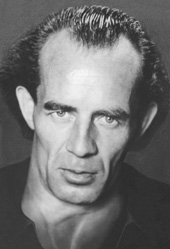
Bruno Groening - A Revolution in MedicineThe rehabilitation of a man who was misunderstoodA medical documentation on spiritual healing. Dr. Matthias Kamp, M.D.
|
Chapter 3The teachings of Bruno GroeningBruno Groening's secret discovered by science? In many newspapers the description of Bruno Groening was often very biased and, in an unmistakably ironic undertone they referred to him as "The Miracle Doctor Groening". No mention was made of Groening's teachings. In this way his opponents in the medical ranks could easily minimise the importance of his person since public awareness was unilaterally concentrated on the healer and miracle doctor aspect. Reports of successful healings were exclusively confined to illnesses of emotional origin. Stories that he apparently had better results than doctors were either denied or depicted as the result of mass psychosis. From documents relating to this time I gathered the impression that medical science went to great lengths to convince the public that it was quite familiar with the work of Bruno Groening, and the background to what so many people considered healings bordering on the miraculous was transparently obvious. With symbolic clarity this attitude was reflected on the title page of the periodical Revue in October 1949: "Groening's Secret Discovered By Science!"1 The apparently problem-free incorporation of Bruno Groening's work into the everyday medical way of thinking made it unnecessary for wider sections of the public to test events around him more closely. For what could he produce in the way of something new if science had seen through him? An objective observer who ignores this judgement and pays closer attention to the events around Bruno Groening will soon have to admit that medical vocabulary is hopelessly inadequate when it tries to explain these satisfactorily. Reports of healings, which beyond any rule out a connection with suggestive influence, and the many witnesses of the unusual spiritual abilities of Bruno Groening are overt proof of the reality of an energy which, until then, had steadfastly been denied by science. The talks of Bruno Groening make the causes of health and sickness quite clear, something that no medical text book does. This knowledge, spoken with such intransigence and clarity, had to give offence as it questioned fundamental elements of the ideology of our society. The sum of Bruno Groening's statements clearly evince a teaching so that it seems appropriate to speak of "Bruno Groening's teachings" in the following pages. Bruno Groening: "The existence of God is a fact" The following description of Bruno Groening's teachings is based on original sources - his talks, contemporary publications and information which I obtained from those who knew him. I have tried to recapture the spirit of his statements as closely as possible. Most people believe that they recognise themselves in their exterior, visible body. But Bruno Groening saw the body as a tool that enabled the human being to function in the material world. He was convinced that man was, in reality, a spirit with a soul and was only bound to a material body while on earth. Unequivocally he therefore drew attention to a Higher Spiritual Reality. The spiritual levels of existence were not theoretical for him; they were a living actuality. He experienced them within himself and from this determining factor came his power of conviction and knowledge of the deep-seated correlations with health and illness. He emphasised that this information was not new. It was a part of elemental knowledge, which the majority of modern mankind had lost the ability to access. "I do not know much" he said in a talk to the Springe group, "I only know what people today have forgotten, which is precisely why I consider [...] it my duty to teach everybody whom he belongs to, what his essential nature is and how he can absorb the Creator's energy so that he can also become the master of his body."2 The existence of God was a fact for Bruno Groening. From this inner conviction came an avowal of faith to an Omnipotence in whom many people could no longer believe. "I feel obligated to enlighten people. [...] And if one of you should say there is no God, I would allow myself to be torn apart to prove the opposite. I will not abandon my belief."3 But he did not confine himself to pious words. He wanted to guide people back to where they could, once again, experience that God, who had become so estranged, could and would help them, if they would let Him. For this reason he considered his first task was to enable those seeking help to gain admission - in a conscious and cognisant manner - to the Creator's universal energy, which he also called the healing current. The absorption of the Creator's energy Before Bruno Groening began his address an assistant usually spoke to those seeking help and pointed out the prerequisites which were necessary in order to be able to absorb the healing energy. They were not to cross their arms or legs; they were to fix their thoughts on a pleasant subject and pay close attention to their bodies. Bruno Groening himself once expressed this request in the following words: "If you are willing to change and really pay attention to the needs of your body, I advise you not to loll around and cross your legs because God did not create them for this purpose. If you want to receive this most valuable gift, you must sit with open hands and also have a heartfelt wish. You must ask God to grant you what you really need. If you do this now, my friends, you will not only receive something but you will always receive and be aware of what your body needs."4 In the course of conversation with different healers I was able to observe that they work in the same way. A healer from Bremen told me that he intuitively realised that the healing energy flowed better if one did not cross one's arms and legs. A lady healer told me that she could not work if the hands of the person seeking healing were crossed. It gave her a congested feeling. Bruno Groening described these underlying proceedings in simple words. He called the healing energy of God a healing stream. Interestingly enough, most people who received this energy according to Bruno Groening's instruction, stated that they felt a tingling sensation and a strong feeling of warmth, very much like a pleasant current that flowed through their body. Groening asked his audience to imagine that their arms and legs were current conductors. Technically, if two such non-insulated conductors touch, there is a short circuit. It is the same with the body. Crossed arms or legs create a blockage so that the delicate energy cannot flow through the body. In this way, one more or less cuts oneself off from it. This is particularly perceptible when a body is correspondingly sensitive. Several people whom I questioned described the ensuing occurrences as an unpleasant feeling, a pressure, as though there was a congestion somewhere. Most people are not aware of the fact that this energy-loading process in their bodies is available to them. I have noticed, for instance at a public meeting, that over 90 % of the audience cross their arms or legs. Some even succeed in crossing their legs twice. They find this way of sitting normal and comfortable. They do not miss the energy because they do not know about it. As they do not sit like this continuously, at some point they will get up again, a certain equilibrium can always be achieved and problems normally only occur after a longer period of latency. The healing stream: suggestion or healing energy? The X factor in Bruno Groening's work. To return to Bruno Groening's teachings: according to him the body must be in a receptive stance to absorb the Creator's energy. In addition, the soul must also be unobstructed: negative ideas, and above all, every thought of illness and every worry must be put aside in favour of pleasant concepts. Then the suppliant must observe what happens in his body. Bruno Groening called this inner and outer attitude "tuning in". Again he used a technical comparison to make this clear. By tuning in, a person consciously makes his body receptive to the healing energy, the Creator's energy, and receives, as Bruno Groening also said, the healing wave length, the transmission from God. Bruno Groening compared the human body to a radio. A radio must also be tuned in to a desired programme, in order to receive it. If the prerequisites have been furnished, the person will receive the healing wave length (healing energy). Usually the feelings, which have already been described, will be felt. Interestingly enough, they were not confined to Bruno Groening's audiences alone; today the same experiences are related by those seeking help and absorbing the healing stream. They are not only feelings similar to a light electric current, but often also a sensation of strength, lightness, and happiness has been described. Some people, on the other hand, feel nothing. But the inflow of power is not dependent on its deliberate, emotional perception. This is shown by the fact that some people seeking help, and who do not consciously experience feeling the healing stream, are nevertheless healed by it. How do these feelings occur? This question was also asked by the scientists of the examining commission at Heidelberg in 1949, when they attempted to investigate Bruno Groening's healings by submitting them to clinical controls. They discovered a certain similarity with the work of Professor J. H. Schultz, the well-known psychotherapist from Berlin. In 1920, his experience with hypnosis led to the establishment of autogenic training. A superficial examination would appear to endorse such a comparison. The so-called, "cab driver's position" in autogenic training also requires the body to be in a receptive stance. Arms and legs are not to be crossed, the back remains free, the hands lie on the thighs. But closer examination quickly reveals the differences. Schultz had always described autogenic training as, "a training exercise leading to self hypnosis"5, which clearly stresses the undeniable link to hypnosis. For Bruno Groening, human free will was inviolable, which is why he rejected hypnosis and suggestion. Schultz, like Groening, said that a person should concentrate on his bodily feelings, but, in autogenic training these sensations are produced by autosuggestion. This means that the patient is instructed to concentrate repeatedly on certain exercise formulae, or suggestive images, until these become perceptible. The formulae are of this type: "My right (left) arm is very heavy." "I am completely at rest." "My heart beats quietly and peacefully." etc. The trainee should see the training patterns graphically in his mind's eye. Through this repetitive suggestion the vegetative nervous system, which normally is not accessible, can be influenced and, for example, muscles and vessels can be relaxed. Unlike autogenic training, tuning in does not require suggestive images of conceptional examples or thought patterns. In autogenic training a person actively tries to bring about a change in his body. When he tunes in, according to the teachings of Bruno Groening, he becomes the recipient of the healing stream. He is not trying to activate changes in himself by trying to force certain thought patterns into his consciousness, but It, the Divine energy, works within him. By letting It work, he can observe Its effect on both his body and soul. Peter Drittler, (31) from L., was taught autogenic training by a doctor and practised it every day over a long period of time. Then he learned about the teachings of Bruno Groening and began to tune in to the healing energy. From personal experience he was able to confirm my opinion and told me: "I learned about the teachings of Bruno Groening in a letter from an old girl friend. Shortly after I had read it, a current like a wave suddenly washed through me from the top of my head to the soles of my feet. Immediately I recognised the healing stream and in an instant I was filled with pleasant, liberating feelings as though an inner cleansing was occurring. I have the same experience every time I tune in to the healing stream. I could recognise obvious differences to autogenic training. In autogenic training I concentrated on specific sections of the body or mental states I wished to attain. When I tune in to the healing stream I chase away all negative thoughts and feelings and think of a pleasant experience, for instance, a sunrise. At the same time I observe my body and avail myself of the positive effect of the stream. Through Bruno Groening I have attained an inner link to the healing energy, an energy that can even heal medically incurable illnesses. Autogenic training is not in a position to do this. I had a good command of autogenic training but I stopped it because it did so little for me; the effect was short-lived and superficial. Through the healing stream I have achieved what autogenic training could not do. Cigarettes, alcohol and gaming machines have lost their hold over me. Recurring suicidal intentions, fear of examinations and even of life itself, which used to haunt me before, all these have stopped completely and in their place there is a new zest for living, something that was completely unknown to me. It is as if through this energy light has come into me, as if through the healing stream a `current of life' flows through me. On account of these impressive occurrences in and around me, my belief in God has been rekindled, a belief I gave up years ago."6 From a medical point of view it is clear that the query as to the source of these feelings rapidly leads to an ideological problem. Bruno Groening's explanation that it was the work of a Higher Power, which he identified as a Divine healing stream, shattered scientific medicine's world view, which was locked into a soulless concept of a material age. It revealed something new which called for a revision of thought. History is full of examples of failures of new ideas because they required such a re-examination. When one considers that the first manual of psychosomatic medicine appeared in 1943, and still today despite new findings, many doctors are hard put to accept that the power of the mind can affect the body, one can imagine how difficult it was for Bruno Groening in 1949 to make the influential scientific authorities understand the nature of his teachings. The scientists in Heidelberg tried hard to incorporate the work of the healing stream into their way of thinking. In his concluding interview after the investigations Professor Fischer described his impression as follows: "Groening does not stimulate through auto-suggestion (as in autogenic training) but first creates a powerful anticipatory suspense by inviting the patient to observe feelings in his organs. In most cases the feelings occur as a result of this anticipatory suspense."7 A very unsatisfactory explanation. The difficulty of incorporating Bruno Groening's work into existing formulae becomes even more obvious in Professor Fischer's subsequent statements. He defines a very questionable "intermediate" phase: "He (Groening) has instinctively developed something new, an intermediate step between autogenic training and extraneous suggestion."8 The work of a Higher Power was denied, the feelings were credited to a particular form of suggestion generated by Bruno Groening and with a clear conscience it could publicly be stated: "Groening's Secret Discovered By Science!"9 Some years later, quite unobtrusively, came the honest admission from the renowned psychotherapist, Dr G. R. Heyer who made it quite clear that the work of Bruno Groening was "way above the suggestive work of psychotherapy" and "there was only a remote resemblance recognisable in the fundamentals." He stressed that, "from the occasionally too highly positioned standpoint of science one should not, at the outset, allow oneself to make the error of simply challenging these healings without exact knowledge of the matter, thereby committing an age-old and dangerous mistake which arrogantly declared: `Something like this does not exist [...]' or, alternatively: `We've always known this [...]'" He presumed that in Bruno Groening's work there was an additional unknown dimension which was the dominant factor. He called it "the big X ".10 Bruno Groening publicly and repeatedly named this unknown dimension, which still today is not accepted by many scientists, when he was asked how the events around him could be explained: "I do not heal, but through the teachings of my religious conviction It guides people to healing"11 and "Do not thank me, thank God."12 In one of his addresses, he described his work: "I am ready to convey to you, how this power is given to me, not by man but in fact by God in order to help and heal people. Please, never say that I healed you. No! Faith in God, contact to God, this is the healing wave length that you have received through my body. I am only an intermediary, no more, a tiny transformer. You can obtain your power from me, but it is wholly up to you, how you receive it."13 These words express personal humility and the recognition of higher laws. This It, the healing energy of God, was both the new and, at the same time, the primeval aspect of his teachings. In his eyes, his task was consciously to give back this It to humanity. Independently of Bruno Groening, many healers describe their work in identical or similar terms. In Anita Höhne's book, Geistheiler heute, Margarete Rauer, a healer from Wuppertal, states that she herself cannot heal, only Jesus Christ can do this. She is only a channel for the Divine healing powers. Like Bruno Groening she also rejects the concept "miracle" to describe the effect of the healing energy. In the same book, Anita Stark, a Swiss healer, reports: "I feel that something passes through me [...] a sensation like sitting on an ant heap [...] sometimes I am cold, sometimes hot."14 Yet another Swiss healer, Erika Blöckinger, also stresses that this energy does not come from her. She says that many of those seeking help see this energy as a light: "They experience a river of energy which strikes them like a beam of light [...] they sense warmth, and then feel free and at ease."15 In England healers have joined together in associations. One of these is The National Federation of Spiritual Healers, which has over 6000 members as well as affiliated members and organisations around the world. The estimated number of spiritual healers in England is over 20.000. If you ask these healers where their healing energy comes from, they usually reply that they do not heal; they are only intermediaries for God's energy streams that flow through the universe.16 The "regulations" - a cleansing of the body? When Bruno Groening had spoken he would ask the persons present whether they had experienced any physical reactions. They often said that their pains had noticeably intensified while he was speaking. Much to the amazement of those seeking help, it was obvious that Bruno Groening was delighted by this news. After all, they had come to be healed and could not understand that an intensification of pain augured well. Bruno Groening called the reactions released by the inflow of healing energy, which manifested as intensified pain or even other discomforts: "regulations". He said about this phenomenon: "There must be these regulation pains. Individuals often fear that their problems are worsening when they begin. [...] Others make the most of this and say: `He makes the people ill instead of well.' This is why I draw your attention to the fact that when the regulation pains come, you must tolerate them. Nothing serious is happening, the person is only being healed."17 For Bruno Groening the regulations were a cleansing process, a reaction when the healing stream reached those parts of the body and soul where a disturbance (illness) had appeared. They could also be considered the visible signs of a process of readjustment, a reducing to order of a disturbed physical or mental function. Often these adjustments manifest as pain or the existing symptoms of the illness are intensified, sometimes they are weaker or unchanged. But there can also be reactions like diarrhoea, vomiting, fever, general debility, weakness, etc. When regulations occur it is a good sign, because it is evident that the person is responding to the healing energy and the cleansing process in his body has begun. Anna K. (59) from W. suffered for more than 13 years from hemiplegia on her left side as a result of a stroke with haemorrhaging on the right side of the brain. When she absorbed the healing stream for the first time, she felt a tingling sensation and the right (!) side of her head began to hurt. To understand this, the anatomical factors of the body must be taken in consideration. In the case of a left-sided hemiplegia, the corresponding cells on the right side of the brain are destroyed. The nerve tracts cross over to the other side of the brain stem, so that the muscles on the left side of the body are maintained by the right side of the brain. With amazing precision, the regulations occurred exactly at the spot where the stroke had damaged the brain cells 13 years before. At this point it is high time for every reader to have realised that it is absolutely wrong to attribute the work of the healing stream to imagination or suggestion. From a medical point of view, nerve cells do not regenerate. The disappearance within a few days of an organic nerve paralysis, which had lasted over a decade, cannot be explained. This is the work of a healing energy which operates according to its own laws in the body and can even heal purely organic damage. Christa Leiendecker, (33) from K, told me of her healings. She had suffered from asthma since childhood, hay fever from the age of 12, cramps in her feet at night and an allergy to walnuts. She learned about the teachings of Bruno Groening in May 1981, and on the same evening that she tuned in to the healing energy she had severe breathing difficulties. The next day she was free from asthma and has remained free these past 12 years. The second healing took place a few days later. While she was out walking, her right eye started to itch and water, a typical hay fever symptom. But only her right eye. This she had never experienced before; normally both eyes were irritated and she had a running nose. She believed that this long-standing problem was being regulated out of her body and the strong itching and watering of the right eye was just part of the cleansing process. And indeed the next day the eye was free again, and she has not had an attack of hay fever again. She can now walk through summer fields and meadows in bloom without a problem. The third healing, the allergy to walnuts, followed in the autumn of 1981. Suddenly she felt that she could tolerate walnuts again. She tried a piece and was very surprised that there was no reaction. During the following days she again tried further small quantities. This time the usual symptoms started again: her whole body began to itch, the mucous membranes reacted and she had fever. But once again she had the inner conviction that these occurrences were part of the cleansing process. She said: "With the fourth piece of walnut, the regulations were so strong that I felt my head was much bigger than normal. Although I was cold, I felt intensely hot. Because I knew this was the last cleansing, I did not reach for the cream. This condition persisted for a few hours that evening. The next morning everything was gone. Since then I have been free from this problem too and can eat everything without worry."18 And today, 12 years later, she is still free from all her various problems. The nightly foot cramps disappeared in July 1981. She was at a day-time group meeting and shortly after tuning in the cramps began. With interruptions they continued until evening. Once again, she believed that this was part of the cleansing and readjustment process of the body before healing. And she was right. The cramps have never returned. A great variety of symptoms of the inner cleansing process can manifest in many outwardly visible forms. The regulations can, as witnessed in the case of the asthma healing, appear in the same form as the normal illness, or, in an atypical occurrence as in the healing of the hay fever and foot cramps. Such atypical developments of course make it easy to muster the confidence to await the event which is so obviously the healing reaction. I have been told many times by people who have been healed that there is often an inexplicable inner security, an intuitive knowledge that the reactions belong to the regulation and healing process. From the age of 16 Ferdinand Duwe (44) from L., suffered from stomach pains caused by gastritis and recurring stomach and duodenal ulcers. Because of this he was exempted from military service. Every day he had to take the necessary medications, but they only served to relieve the continuous pain. Often it woke him at night. He had frequently been admitted to hospital, but nothing could be done for him as he had declined an operation. According to his medical file, he had a chronic stomach and duodenal problem. The results of this illness could be traced through the individual fates of his immediate family. His father and brother had suffered perforated ulcers; his youngest brother complained of the same problem, as did all his uncles. One uncle had to have two thirds of his stomach removed, another died from the same condition. In 1988, through a work colleague, he heard of spiritual healing through the teachings of Bruno Groening. He decided to try this, so in September 1988 his friend explained the teachings to him and showed him how to receive the healing energy. Immediately he could feel it in his body. From that moment on, he tuned in every morning and evening. He believed that now the pains were not caused by the illness, but were regulations. They were there again the following days, but now were a different kind of pain. They were more severe, but came intermittently, whereas before they had been continuous. The noticeable difference of the pain pattern as a result of absorbing healing energy made it easier for him to recognise the outward signs of an inner healing. He experienced the pains from the 10th to the 15th of October 1988, during which time they grew steadily worse and were more frequent. He explained to me how the healing came about: "On the Saturday morning, the pains were particularly bad. I had to get up at three o'clock as I was on duty at four. The regulation pains were there again, and were very intense. I would have liked nothing more than to report sick, but where would I have done this and to whom at this hour? I packed the book, Hier ist die Wahrheit an und um Bruno Groening into my bag, and off I went. As soon as I arrived I began to read the book whenever my work permitted. Towards seven o'clock, when in great pain I had read a few pages, I began to feel - at first weakly but then rapidly more strongly - a tingling sensation from head to foot. It was a wonderfully pleasant feeling. And when it stopped, my pains were gone. It was as though I had stood under a shower, and the water had washed away the pain along the length of my body. It took me some time to realise fully what had happened to me, what I had experienced. From that moment on the pains completely disappeared. Shortly afterwards I was X-rayed and there was no sign of ulcers. After decades I am quite free from pain. I am a completely healthy and happy person, and thank Bruno Groening and all those who helped me to believe in God and Divine energy."19 The renowned physician, Paracelsus, apparently also knew about the phenomenon of cleansing (regulation) pains at the beginning of the 16th century. In his writings we read: "Whoever wishes to regain his health, must bear in mind that this does not occur without pain [...] and in the same way that through our sweat we earn our food, so it is here: with pain and sweat we go from sickness to health."20 In homeopathy the concept of "an initial worsening" is known. After the administration of a medication it is often to be observed that the symptoms of the illness worsen for a while before the healing occurs. A Swiss healer, Friedrich Brechbühl, considers healing as an "activation of powers which often first trigger a resistance, a more intense manifestation of the symptoms of the illness." He calls it the healing crisis, the birth pangs of health. To him this is always a confirmation that he can help a sick person.21 In conversation with healers, I received further proof of this. The alternative medical practitioner Hossenfelder, from D., told me that he had observed that during treatment 80% of all patients had an intensification of pain. This apparent deterioration lasted some time and then suddenly disappeared.22 Erika Petz, a healer from M., finds it quite normal that people she treats with healing energy initially experience a change for the worse in their condition. This shows, she says, that the patient is reacting to the healing energy. However, an initial deterioration is not arbitrary. Healings can also occur without such reactions.23 In his book, Magnetismus - Das Urheilmittel, Rudolf Thetter describes his experiences as a healer. He finds it a considerable problem to make his patients understand that they often need to pass through a crisis in order to be healed and reports: "One cannot warn people strongly enough about such crises, because when they begin one so often hears: `Before I came for treatment I was sick, but now I am really sick [...].' Sometimes these turning points are initially turbulent. They introduce fever, diarrhoea - sometimes violent diarrhoea - increased urination, dizziness, exhaustion, profuse perspiration, extreme discomfort, nervous irritability, temporary insomnia, stronger or weaker menstrual periods [...], above all, the symptoms of the illness are intensified and it is understandable that the patient loses faith in a treatment that appears to make him worse than he was."24 Thetter is of the opinion that "crises are a natural pre-cursor to the healing process," and are "not dangerous but necessary for recovery."25 In these moments "the wise work" of the Divine Unknown is apparent. One cannot, therefore, pre-determine whether, when and in what form such a condition will occur. It is stimulated by the strengthening powers administered to the organism by the treatment. Reinforcements are, as it were, placed at the disposal of the sick body. According to Thetter, the patient feels stronger and more at ease; the whole organism revives until the powers within it "become so strong that they can renew the fight against the illness."26 When this renewed battle against the illness begins, the crisis sets in. He has noticed this most frequently in cases of chronic illnesses. During the crisis, the disturbance becomes acute again and the illness leaves the body. "If the illness is still there after the crisis, even in a weakened form, then a renewed delivery of vital energy will generate a new crisis. These crises will re-occur at ever greater intervals in diminishing intensity [...] until an eventual victory, which is the healing, is attained."27 Thetter stresses that, on the other hand, it is wrong to be afraid of such crises: "In a considerable number of illnesses they are only evident as a weak intensification of the normal symptoms. In some instances, they do not occur at all, yet recovery still follows."28 One cannot be dogmatic about these processes because, according to Thetter: "we are face to face with life's own, and for us mysterious, set of rules."29 Mary Ehlen, (44) from B. experienced healing without regulation pains of any kind. Since 1991 she had suffered from a very painful shoulder-arm syndrome of the right arm which, despite immobilisation, would not heal. She had also suffered from pains in her back (chronic lumbago) for decades. This pain was so bad, that she could hardly get out of bed in the morning. Physiotherapy, in the form of massage and fango, brought some relief but could not prevent the recurrence of this chronic complaint. She had suffered stomach pains, caused by a reflux according to her house doctor, since the middle of 1991. Prescribed antacid medications did not really help. On the evening of January 31, 1992 she was introduced to the teachings of Bruno Groening. That same evening all her pains disappeared. Since this spontaneous healing she has remained problem-free. She no longer requires any medications and can move without pain. The importance of thought during the regulation process Bruno Groening made it very clear how important thoughts were during the transitional period preceding healing. The regulation process is triggered by spiritual power, and accordingly can be influenced to a considerable extent by the thoughts of the individual. I have already made it clear that to absorb the healing energy not only a receptive body stance is necessary, but an open mind is extremely important. Negative thoughts, such as personal worries or preoccupation with the illness, prevent the inflow of power, which everybody can easily observe himself. As the regulation process depends on this energy it is most important that the flow is continuous. Therefore it is understandable that Bruno Groening always warned his listeners to pay attention to the people with whom they associated, particularly during the period of re-adjustment. In his little book, Bruno Groening's Heilstrom - seine Natur und seine Wirkung, Friedrich Retlow writes about this interim period: "The train of thought during this transitional period and the time until we have our recovery firmly in hand is extremely important. Particularly in cases of healing through the energy stream of Bruno Groening, which the material world opposes with unbelief and rejection, there is the danger that disparaging opinions and malicious judgements assail the sick person and with their suggestive power destroy his belief in Groening's ability and thereby his faith in his own healing and recovery. It is understandable that if such a pernicious influence is absorbed by the emotions of the sick person it will suppress and disturb the flow of the healing stream, which is constantly at work. Many relapses can be traced back to the destructive influence of negative thoughts. Thoughts are energies which have their own specific oscillations and vibrations. In the same way as an oven emits comforting heat or coal fumes, a person can constantly, through his thoughts, transmit healthy, elevating energies if they are positive, or unhealthy, degrading ones if they are negative. "Therefore, when the sick have been healed in a harmonious environment of good, helpful and optimistic people and they enter a circle of mocking, doubting unbelievers where they have to remain, relapses can occur for the above-mentioned reasons even though the cause is not apparent. "It is therefore advisable when such a change of environment occurs, as well as when there is contact with sceptics and those who are ignorant, to say as little as possible about healing being received from a healing stream. Only when the transitional period has ended and the physiological condition is consolidated and assured should one speak freely about it."31 Thetter mentions similar experiences in his book: "The greatest demand on a helper occurs when, at the first crisis, the patient's doubts set in [...]. His whole circle of acquaintances, the know-alls, badger him [...]. All this makes life difficult for the healer [...] and the progress of the healing itself can have many unfavourable consequences. [...] It is better if the person receiving treatment does not discuss this with anybody."32 An essential element of Bruno Groening's teachings is knowledge of the power of thought. As already mentioned in the regulation process, the individual's thoughts are of decisive significance for the healing. This is understandable when one bears in mind that Bruno Groening considered thoughts as active working energies, which were not without consequence for a person's state of health. Negative thoughts weaken him and over a longer period of time can cause disturbances to both the soul and the body. Sooner or later they can manifest as visible illnesses. Positive thoughts build him up, give him strength and promote and stabilise his health. Bruno Groening continually told his listeners to pay attention to their thoughts and not permit the entry of negative thoughts. He knew that negative thoughts worked against the inflow of constructive, positive energies and cut man off from God. In one of his talks, the warning was particularly clear: "Protect yourself from every bad thought! [...] Refuse to accept it, and rather say to yourself [...]: `I don't want anything to do with this bad thought. Now I want a good thought!' "Then think of something else. Look through the window, where you see something that is really good, really Divine, for you are looking at Nature. You see how now in spring everything is beginning to sprout and come back to life. Before our eyes everything is turning green [...]. And as you observe this, as you observe Nature, you will find that these bad thoughts have gone. This act of observing has established your link with God."33 Bruno Groening knew that most people habitually have negative thoughts without realising the damage these cause them. In this category he not only included fear, hate, jealousy, envy or violent anger, amongst others, but also every thought that takes away human happiness, peace or kindness. Not only the creeping poison of worry, mourning, self-doubt and discontent has a debilitating and disturbing effect, but also notions of vanity, self-importance and every preoccupation with something unpleasant, whether it has occurred in one's own life or that of another person. Bruno Groening considered the first duty of everybody wishing to combat sickness and problems at root level was to reject all these types of thoughts and make a conscious effort to accept only good thoughts. And precisely this habit of so many people constantly to dwell on their illness is a great handicap in the attainment of healing. He described it very simply: "Take a bowl which is filled, it doesn't matter with what, but let us say it is filled with fruit. For days it has stood around, and nobody paid it attention, not knowing how to handle it. Now the fruit is rotten. It can no longer be enjoyed. And now somebody comes along and wants to give you fresh, healthy fruit. It would be very stupid if you laid this fresh fruit on top of the old. It would soon be as bad as the first lot. If you want to keep the fresh fruit, you must first throw out the bad, unhealthy and unenjoyable consignment. Not just that, you have to clean the bowl and make it ready to accept the fresh fruit. Now, liken this bowl to your body, the bad fruit to your sick organs and the fresh to what you hope to attain. But this is not possible if you cannot throw away the bad fruit or, in this case, if you are preoccupied with your illness."34 Every negative thought, every thought about the illness blocks the free flow of the healing energy in people. Thoughts about the ailment envelop them like a fog, so that the light, constructive, cleansing, Divine powers cannot enter. First they have to empty out these negative concepts, and free their thinking from this obsession if they want to absorb what is good. The cleansing of the body from these negative energies is carried out by the inflowing, positive energies which the person absorbs in great quantities through the healing stream. But many people think almost uninterruptedly of their illness and consider this normal. Their thoughts continually revolve around the words of their doctor and any change in their condition is viewed with great concern as the harbinger of deterioration. Their illness has such a hold over them that they often can talk of nothing else. They are not aware of the fact that because of their thoughts they are in constant contact with what they consider harmful and actually want to be rid of, and they continually impress a picture of illness and deterioration on their subconscious mind. The creative energies of the body, working towards healing, are constantly impeded. Unknowingly these people work untiringly to ensure that what they fear becomes reality. And often, despite every treatment, their condition worsens. But only very few realise that they themselves are the cause. It is incomprehensible that even many doctors do not understand these correlations, which result from one-sided body-orientated thinking. So man is absolved from the responsibility of his thoughts with all their dangerous consequences. Some scientific disciplines nevertheless believe in this important subject. A few years ago, psychosomatic medicine developed a new field of specialisation, psycho-neuro-immunology. This investigates the influence of the individual's thoughts and feelings on his immune system. It has been confirmed that negative thoughts and feelings have a damaging effect on the immune system. And yet this knowledge is not new. Paracelsus, (1494-1541) the greatest physician at the outset of modern times, spoke of people's "inner doctor", the "internal healer" who, as the maintainer and restorer of health is always present to initiate healing in the organism. It is the subconscious side of man and easily influenced by thoughts. Negative thoughts have an inhibitory effect while positive thoughts strengthen its marshalling, constructive powers. Diana Craig, a well-known English spiritual healer, who has worked together with probably the most famous English spiritual healer, Harry Edwards, always draws her patient's attention to the power of his positive and negative thoughts. She is convinced that everybody is considerably responsible for his own illness, in that through his destructive thoughts he brings himself into a condition of disharmony and imbalance. To be healed, the individual must strive to "change the thought patterns and convert negative thoughts into positive ones."35 The French chemist, Emil Coué, (1857 - 1926) knew that with comments like: "This is an outstanding medicine, it will soon have you back on your feet, the doctor couldn't have prescribed anything better" etc. the prescribed medications immediately had a better effect. From this realisation he developed a method of conscious autosuggestion. He assumed that within humans there were graphic and creative powers which he called, "our true and best servants". Others who came to similar conclusions, spoke of, "the secret helpers in us" or "the internal doctor", whose activity was considerably dependent upon our manner of thinking. Coué stressed the dangers of negative thoughts which paralyse these inner powers. He gave people, so-called positive auto suggestions, word sequences, which they were to keep repeating to themselves and clearly picturing as reality. The best-known formula is: "With each day that passes, I feel better and better."36 Eventually Coué spoke of a law of thought materialisation: "Every thought that fills us, strives with all its might towards materialisation, in so far as this is possible within the framework of the laws of nature."37 The Austrian senior medical advisor, Dr Erich Rauch, adopted the system of Coué and wrote in his book, Autosuggestion und Heilung: "We have absolutely no idea what immense forces lie dormant in every person! Powers that have a vast potential if only we could awaken them to the unwavering belief in themselves and their possibilities. In this way thoughts that are firmly believed can assume a role in determining our fate; a role that is far more important than everything we consciously imagine we wish or want [...]. What happens is not what we want but what we believe."38 Dr Rauch also warned emphatically against discussing illness with other people because he considered thoughts and words, "a mortal sin against the inner physician": "Every sorrowful remark strengthens the negative power and makes it more difficult for us to free ourselves from the clutches of sadness and suffering."39 He goes on to say: "Even the progress of the most serious illness like cancer can essentially depend on the self-influencing effect of the sick person. This applies equally to acute and chronic illnesses and even to infections, as was recently stressed by the prominent scientist, Professor V. E. Frankl, in his address to a gathering of doctors on a festive occasion in Vienna: `The condition of the immune system in man is considerably determined by his emotions!' "The well-known specialist, Professor A. Jores, writes that even suffering, which is apparently miles away from psychological illnesses like the results of an accident, injuries and also broken bones, relies on an inner change in the way of thinking, and therefore on the self-influence of thoughts of the injured person for his healing process."40 The American physician, Dr Simonton, also worked with the "power of thought". His experiences led him to develop a method reminiscent of the thousand-year-old recommended way of healing used by medical men and schamans although Dr Simonton was ignorant of this old knowledge. An essential part of his work is the technique of visualising (also called imaging, which is a graphic visualisation of a particularly desired condition through a deliberate orientation of thoughts in this direction, for instance towards health). In addition to conventional cancer therapy, he instructs his patients to keep pictorially visualising their return to health and conquering the illness. From 1974 to 1981 he made an extensive study with revolutionary results. Testing two groups of patients with comparable symptoms, he could prove that those who underwent his therapy lived, on average, twice as long as those who received the usual therapies in the best medical centres.41 Furthermore, the report showed that through his therapy he saved several people considered incurable by other doctors, and restored some of them to health.42 Simonton also discovered that, above all, destructive emotions like suppressed anger, fear and hopelessness can cause conditions in the body for cancer to spread. Therefore the first aim of his therapy is to change his patients' way of thinking. He teaches them that they and their belief in themselves is the most important factor in the fight against cancer. In an interview he talked about his work: "My whole work is the result of a deep spiritual change that I underwent. I grew up in the belief that I was naturally bad. When I began to discover this work, it was revealed to me during meditation that not only was this opinion wrong, but nobody is naturally bad. Everybody is made of the same Divine substance and is naturally good. This was a very deep experience for me. It happened in 1971 shortly before I treated my first patient by this new method and just before I understood that if we change our behaviour we change our body chemistry [...]. Since then I meditate regularly."43 The fact that the power of the spirit is transmitted through thought was known thousands of years ago in the teachings of the sages of all nations. Whether it was the wise men of ancient India, China or other countries, all of them were aware that the control and guidance of thoughts towards what was good was the key to inner strength, health and spiritual development. So Buddha is quoted as saying: "Power over thoughts is power over body, life and fate." Only in the present age, in the course of its scientific discoveries and new techniques, has the power that lies within people been forgotten. But laws do not lose their effect simply because one does not know them. The consequences of disregarding the laws of the spirit are alarmingly manifest. On the other hand, the pressure of hardship and inner emptiness causes more and more people to become aware of themselves and the prophetic power of their own spirit to incline in a positive or negative direction. The power of thought is the subject of a great many publications with a circulation of millions by such authors as R. W. Trine, Sheldon Leavitt, Dale Carnegie, Joseph Murphy, Norman Vincent Peale, and in German-speaking countries, K. O. Schmidt. The ancient law of training one's thoughts has gratefully been adopted as positive thought by many readers who find it an enormous help in their lives. Talking about illness - A great danger for the healing process What applies to thoughts, applies even more so to the spoken word. Bruno Groening also deals with this in one of his addresses: "Dear friends, I don't believe that you have come here today just to enumerate all your sorrows and problems. For if this had been your intention, you would all complain. Such despondent words would cross your lips that you would awaken the greatest pity in your fellow man, if possible in all your fellow men, because I know that you are accustomed only to speak about your problems; what you think is wrong with your body, what you see, what you hear, what you smell, what you taste, and also, what you feel. You are in the grip of illness, but it has never occurred to you that primarily, you yourselves are to blame that you, which means your body, has been overcome by illness."44 How people have underestimated the power of the spoken word! For if thoughts possess great strength, how potent must the spoken word be! Solomon knew this. In the first proverb of Solomon the following is written about the power of the word: "He that keepeth his mouth, keepeth his life: but he that openeth wide his lips shall have destruction."45 "Death and life are in the power of the tongue: and they that love it shall eat the fruit thereof."46 "Whoso keepeth his mouth and his tongue keepeth his soul from troubles."47 In his autobiography, the Indian yogi Paramahansa Yogananda, describes an impressive experience from his childhood concerning the power of words: "Another early recollection is outstanding; and literally so, for I bear the scar to this day. My elder sister Uma and I were seated in the early morning under a neem tree in our Gorakhpur compound. [...] Uma complained of a boil on her leg, and fetched a jar of ointment. I smeared a bit of the salve on my forearm. `Why do you use medicine on a healthy arm?' `Well, Sis, I feel I am going to have a boil tomorrow. I am testing your ointment on the spot where the boil will appear.' `You little liar!' `Sis, don't call me a liar until you see what happens in the morning.' Indignation filled me. Uma, unimpressed, thrice repeated her taunt. An adamant resolution sounded in my voice as I made slow reply: `By the power of will in me, I say that tomorrow I shall have a fairly large boil in this exact place on my arm; and your boil shall swell to twice its present size!' "Morning found me with a stalwart boil on the indicated spot; the dimensions of Uma's boil had doubled. With a shriek, my sister rushed to Mother: `Mukunda has become a necromancer!' Gravely, Mother instructed me never to use the power of words for doing harm. I have always remembered her counsel, and followed it. "My boil was surgically treated. A noticeable scar, left by the doctor's incision, is present today. On my right forearm is a constant reminder of the power in man's sheer word. "Those simple and apparently harmless phrases to Uma, spoken with deep concentration, had possessed sufficient hidden force to explode like bombs and to produce definite, though injurious, effects. I understood later that the explosive vibratory power in speech could be wisely directed to free one's life from difficulties and thus operate without scar or rebuke."48 It has become a habit for most people to talk about whatever comes to mind without paying attention to the words they use. As many of them positively cling mentally to illness and affliction, they tell practically everybody their whole sad saga or keep harping on whatever oppresses their soul. Dr Rauch writes about this as follows: "Everything is adverse, factual reports of illnesses, operations, treatments or the favourite subject, one's personal illness. In the Far East it is considered the height of tactlessness to tell others about one's misfortunes. But in our circles it is shocking with what perseverance, and often insistence, many people disseminate their problems to all and sundry. Many are completely addicted to the preoccupation of their personal misery, to analyse it and keep talking about it."49 One should be aware of the fact that through talking about illness and problems in the same way as thinking about them, they are constantly being attracted; this means that one consciously binds oneself to them. The person, who in belief and confidence has freed himself from all worries and troubles in order to attain health, once again puts chains around himself with every negative word - chains that he mentally discarded before - and the illness does not recede. This is why Bruno Groening stressed in one of his addresses: "He who occupies himself with his illness clings to it and denies the Divine energy access."50 If one recalls that every negative thought is an effective power that blocks the entry of the healing energy, then it becomes alarmingly obvious with how much negative energy people surround themselves and express in words. They work continuously at augmenting their own problems and the problems of others. They positively cling in thought and word to them and render them every possible consideration. It is as if many of them are perpetually forced to give all their attention to their illness. Others constantly harp back in thought to unpleasant happenings in their past, and evoke all the suffering and pain once again when they speak of these events. As if bound by some magic spell, many people remain bogged down in the negativity of their words. The lamentations, wailing and bitterness about all the bad things they have seen, heard or experienced runs like a red thread through their conversation. Bruno Groening knew that such talk had a detrimental effect on both body and soul. He realised that every negative statement rebounded on people and degraded and weakened them. He knew that through these words the power of negativity was intensified and shackled people increasingly to misery and wretchedness. This is why he warned: "Think only good, speak only good, and do only good."51 "Weigh up every word, every sentence you speak and every thought you receive and consider if it is worthy of reception. Consider very carefully if you have acted correctly! Call yourself to order every day, this means to God! Reprimand yourself!"52 "The person who knows the power of speech pays attention to what he says."53 Now many people are too weak to switch their thoughts and words onto a positive track when they are confronted by a negative experience. Mentally and emotionally trapped by the power of the negative thoughts that occur to them, they instinctively voice these problems to their audience which, through pity and correspondingly bad thoughts, hastens their emotional decline. Bruno Groening indicated that in such a situation a person should turn to a fellow man who has unshakeable faith and pour out his heart in order to free his soul of the burden. Then, together with this person he should absorb the Divine energy, free himself of all negativity and give it with confidence to God. The person he has turned to should assist him in word and deed and above all, with the power of his faith until things are back to normal. In this way a person who has experienced negativity will find it easier to maintain mental contact with positivism. But if he expects help from a Higher Source he must refrain from thinking and speaking about the problem once he has poured his heart out. Fundamentally everybody should be advised not to discuss whatever he does not want to have materialise. The childhood experience of the Indian yogi, Paramahansa Yogananda, should be an impressive warning. One of the main reasons why many people discuss their illness with all and sundry is to arouse pity. Bruno Groening commented on this: "I can give you enough examples of cases where, if the surroundings of the sick person are not perfect or when it has become second nature to these people to seek sympathy, they cannot be helped; they cannot be guided onto the good, the healthy path. Do not, therefore, ask me what I can heal, but who I can heal. And I want to help people attain healing, by showing them the good path, which is the only way the Divine path can be."54 He made a distinction between sympathy and pity. The German word mitleiden means to suffer with (somebody). A person absorbs the other's despondent words, becomes mentally preoccupied with his suffering and soon feels just as depressed and sad. He has absorbed his negativity and allowed its debilitating power to affect his soul. He can no longer offer good advice. His words of consolation are empty and weak. He does not believe himself what he is saying. In his talks Bruno Groening constantly pointed out these correlations. He warned his listeners not to pity other people if they wanted to help them. For they could only transmit to others what they had absorbed. A person cannot comfort and encourage another if he has opened his heart to the latter's complaining and low-spirited words. Bruno Groening advised his listeners to sympathise, rather than pity others. The best way to differentiate between the two is to consider the behaviour of a mother whose child turns to her when it is hurt. First, the child pours out its heart and tells what hurts. The mother then lovingly diverts its thoughts away from the pain with comforting words. She tells it something pleasant and perhaps also takes it compassionately into her arms. She says to her child: "Believe me, it will soon be better again. Do you remember the fun we had yesterday?" The child will open its heart to its mother's words, and absorb them. Its thoughts have been diverted from negative to positive and consequently, innerly linked to a state of goodness. The invigorating energy of its good thoughts will soon make itself noticeable. The mother retains her own energy because she has not dwelled on her child's grief but rather, through her words, has linked the child's spirit to constructive energy. This example makes the difference between sympathy and pity clear. He who wants to help himself and others, should direct his own thoughts and words and those of his fellow man towards what is good, and never allow them to be centred on sorrow and illness. Not to have pity does not mean to be indifferent to the suffering of another, but rather summons the love and sympathy needed to accept his problems and strengthen his optimism and confidence; in other words helps him link up once again with goodness, which is with God. "Thoughts are free" is a sentiment of a well-known German folk song. They really are free, but this does not absolve a person from his individual responsibility. He very much deludes himself if he believes that without scruples of conscience he can think badly about another person, as long as he does not express these thoughts in words. Scientific investigations have repeatedly shown that thoughts can be transmitted from person to person and, what is more, can even result in distinct physiological manifestations in the recipient (see chapter 4). Every thought is spiritual energy and as soon as it begins, starts to realise its content in exact conformity with its intensity. So a bad thought about another person does not only affect your own well-being, but is certain to reach the person you are thinking about. He will either be aware of it or suddenly feel weak for no apparent reason. In his book, In Harmonie mit dem Unendlichen, R.W. Trine writes: "Not only do we attract to ourselves the things we fear, but we also aid in attracting to others the conditions we in our own minds hold them in fear of. This we do in proportion to the strength of our own thought, and in the degree that they are sensitively organised and so influenced by our thought, and this although it be unconscious both on their part and on ours. [...] I know of a number of cases where a child has been so continually held in the thought of fear lest this or that condition come upon him, that the very things that were feared have been drawn to him, which probably otherwise never would have come at all. Many times there has been no adequate basis for the fear. In case there is a basis, then far wiser is it to take exactly the opposite attitude, so as to neutralise the force at work, and then to hold the child in the thought of wisdom and strength that it may be able to meet the condition and master it, instead of being mastered by it. "But a day or two ago a friend was telling me of an experience of his own life in this connection. At a period when he was having a terrific struggle with a certain habit, he was so continually held in the thought of fear by his mother and the young lady to whom he was engaged, the engagement to be consummated at the end of a certain period, the time depending on his proving his mastery, that he, very sensitively organised, continually felt the depressing and weakening effects of their negative thoughts. He could always tell exactly how they felt toward him; he was continually influenced and weakened by their fear, by their questionings, by their suspicions, all of which had the effect of lessening the sense of his own power, all of which had an endeavour-paralysing influence upon him. And so instead of their begetting courage and strength in him, they brought him to a still greater realisation of his own weakness and the almost worthless use of struggle. "Here were two who loved him dearly, and who would have done anything and everything to help him gain the mastery, but who, ignorant of the silent, subtle, ever-working and all-telling power of the thought forces, instead of imparting to him courage, instead of adding to his strength, disarmed him of this, and then added an additional weakness from without. In this way the battle for him was made harder in a three-fold degree."55 This example shows how worry can have a negative effect, even though it is an involuntary act and certainly not the intention of the person transmitting the thoughts. Thoughts that one has about people whom one considers in the wrong have the same severe effect. These are usually generated by anger, rage, and envy. Without being aware of it, a person makes himself as guilty as the accusation he raises against his fellow man. In the same way good thoughts about another person have a beneficial and agreeable effect on him. And so, depending on whether we have good or bad thoughts about our neighbour, we have either a good or bad influence on him. A negative or positive influence can be considerable intensified when we express our thoughts about him in words. Several people then begin to have the same opinion about him and, in accordance with the laws of Nature, their own life and health as well as his are affected. This clearly shows the harmful effect of gossip. Bruno Groening was aware of the penetrating habits of many of his contemporaries who, in the manner of the popular press, wasted time and energy by speaking badly about others. On this account he warned his listeners: "How a person wastes time talking about his neighbours, relatives and friends and the way they live. Dear friend, I say, ask yourself how you live! First worry about your own life! First make sure that you yourself qualify for Divine guidance! If you want to talk about others, if you want to judge them, this is bad. [...] In short, my friends, stop gossiping!"56 Additionally, all thoughts, words and deeds directed towards a fellow man rebound on the sender. Someone who radiates great goodness and makes someone else feel accepted and understood will awaken similar thoughts in the recipient, and these thoughts will react on him and allow the power of virtue to grow in him. In the same way, a person who only directs negative thoughts, words and deeds towards his fellow men will stimulate similar sentiments and acts in them, which will be directed back to him. Bruno Groening expressed this as follows in one of his talks: "As a man sows, so shall he reap. Everything a person says or does will return to him. He will receive what he gives."57 Everybody should test himself, at least once, as to how indiscriminately he absorbs thoughts and, without thinking, then manifests them in words and deeds. Bruno Groening commented on this: "Have you thought about your life? What have you done? What have you said? What thoughts have you absorbed? Were you not immensely interested in negative information, for instance, something you considered sensational, something you could talk about so as not to fall asleep, to avoid boredom? So much is interesting. There was so much to hear, so much to read and such bad things to see. But this has always been, and still is, the way of most of mankind. It is simply a habit."58 It is a sad phenomenon of our age that such behaviour is endorsed by almost the entire media. Despite the fact that the number of programmes is on the increase, the careful observer will rarely come across a presentation that offers the audience something positive and constructive. Every developing personality urgently requires mental guidance towards what is good. The cornerstone of development is a role model or something worthy of imitation. Today a rarity. In addition, most people know nothing about the power of thought. They are at the mercy of their habits and unwittingly, they pass on their bad example to their children, who, under the assault of negative views and erroneous conceptions, are deprived of every form of mental and emotional stability. Disciplined thought is the doorway to God's light Many people consider positive thought nothing more than a technique to "re-programme" themselves at will by "drilling in" a list of certain ideas. It is often presented in management training as a concept to achieve economic goals. Certainly thought contains one of the most powerful laws of the spirit and, without doubt, is of great value if it serves as a reminder of its potentiality. But the conscious direction of thoughts is considerably more than a technique to re-programme the mind at will. Bruno Groening was convinced that all good thoughts and feelings come from God. A person who absorbs a positive thought binds himself to the Source of all goodness. These correlations were already apparent when concentration was directed towards assimilating healing energy. Good thoughts open the door of people's hearts to God's healing energy. And so it is clear why a helping word or a good thought can generate such energy. This stimulating contact is maintained as long as a person retains his belief in good thoughts. But when the urge to succumb to the pressing thought of doubt overcomes him once again, he closes his soul and with it the door that prevents God's light from entering his heart. The mental adjustment to goodness, which means to God, is the most important prerequisite for every healing and spiritual development. Bruno Groening said: "You must follow what is good. You must follow God, for you belong to Him. We must all do this! Everybody owes it to himself. If he does not wish to follow Him, then he cannot be advised, he cannot be helped."59 "God gives us everything that is good, we just have to absorb what He sends us. So - do it!"60 A person must take the first step back to God himself, do good within himself by turning his will, consequently his thoughts, towards goodness thereby setting the mental prerequisites for the healing and stimulating connection to the Source of all goodness. I think I have made it sufficiently clear what tremendous significance the disciplining of thoughts has for the physiological, emotional and spiritual well-being of a person. It is incomprehensible that from the national, but particularly from the religious aspect hardly any importance is attached to the basic requirements for the physiological, moral and spiritual welfare of people. The great opportunity to help them to an early and personally perceptible connection to the healing energy of God is neglected. On the other hand it is just as regrettable that in many esoteric circles positive thought is depicted as a chance for man's self-redemption. Mankind can only be redeemed and healed by God. Good, pious thoughts only open - and this cannot be sufficiently stressed - the door to the heart, which occurs when man rejects negativity so that the boundless work of God can work within him. Every healing and every spiritual development which follows this inner attitude is always a gift, and the grace of God. Submission to God instead of man - the road back to intuition Because the thought processes of a person are of such inestimable importance for his whole existence, the question arises how is he able to differentiate between good and bad thoughts? In every human society the concepts of good and bad have been subject to considerable changes over the centuries and therefore the guideline can only be relative. In addition, thoughts of arrogance, unkindness and jealousy are occasionally very hard to recognise, and many a doubtful thought is, for human understanding, extremely logical. But if the thought is accepted by the person's belief, a bond is forged and it is often very hard to break such a bond again. The "little chink in the door" to one's heart, will quickly grow, similar thoughts will follow and only when the belief in goodness, happiness and peace, has given way to tormenting anxiety and emotional pressure, does the nature of the original thought that was accepted become apparent. But how can a person identify the nature of a thought when it begins, so that he can close the door to his heart before the bond can be established? In an address Bruno Groening said: "What you cannot see, you can feel; this is why you have been given various senses in your body. But you must know them in order to use them."61 He was convinced that man is given internal senses in order to recognise the spiritual region of existence. A good thought, just like a bad thought, is filled with a certain spiritual energy which, in conjunction with the powers of man's belief, has a helpful or harmful effect in his life. Just as a light is perceptible to the eye and sound to the ear, so thought, in accordance with its specific spiritual radiation, makes itself felt in characteristic manner to man's emotional sense. This can be easily understood through a simple example. Notice the emotional reaction to the following train of thought: "I can do it. I will manage it." and then the reaction to the exact opposite: "I cannot do it. I will not manage it." Everybody with a somewhat developed emotional sense will be aware of a different, one could say an opposing radiation. The first train of thought generates a pleasant feeling, whereas the second produces an unpleasant one; some people even experience it as an emotional pain. This is also noticeable with other thoughts although it may not always be so obvious. But if a perceptible spiritual radiation is the basis of every thought, it must apply in equal measure to words and deeds and to all forms and appearances which, after all, are the material expressions of thoughts. Who has not experienced an uneasy feeling and accordingly reacted very carefully to another person's flattering, loving words? Often it is the feeling that recognises a bad intention behind the smiling facade despite all the contrary intellectual arguments. On the other hand, some people tell of an uneasy feeling when they had a special plan in mind and they owe their lives to the fact that they followed this feeling. A friend told me that one morning she had an unpleasant feeling as her mother was about to drive to work in her car. Because of this, she asked her mother to leave the car behind. The mother did so and went by train. And in actual fact that morning on the very road she always used, at the time she would have driven past a certain place there was a serious accident. Kurt Allgeier writes about a similar incident which involves the well-known Innsbruck doctor and healer, Dr Leonhard Hochenegg: "On the day following the catastrophe at Chernobyl, [...] Mrs Hochenegg wanted to go with her children on an excursion to the Karwendel mountains. Her husband opposed this idea emphatically. `No, not today! There is something dangerous in the air. We must stay at home and not drive into the mountains.' Mrs Hochenegg knew that there was no point in arguing with her husband. He knew better. The following day, she learned what her husband had sensed or known, namely that radioactivity had escaped from the exploding atomic power station."62 Many people can tell of similar experiences. It seems as though, through his senses, a person has access to knowledge, which considerably exceeds what he has learned, as well as the perceptive abilities of his external senses. Special attention should be paid to these feelings, particularly in dealings with other people. Bruno Groening suggested that people should ask themselves silently: "pleasant or unpleasant?" and then pay attention to their feelings. Should it be necessary, they should withdraw internally and carefully continue their observation. Particularly people who are being healed should pay attention to their associates and those they confide in. Bruno Groening was convinced that people were given feelings - he also spoke of "true human instinct" - by God in order to have a reliable adviser who would help them to deal with the manifold impressions of life and the conflicting human opinions and teachings, and guide them to goodness and truth. He once said: "Mankind has degenerated and lost its true, human instinct. Not yesterday or today, but generations upon generations ago. Gradually man has become what he is today. He has gone so far that he can go no further."63 To be able to recognise and follow this certain feeling, amidst the confusion of daily thoughts and feelings, was seen by Bruno Groening as an unrenouncable foundation for the return of man to healing and to God. Whoever learns to develop this sense within to its original clarity of perception attains admission to an inner authority, which can free him from dependence on human opinion. For in the feelings of a person there is far more than just a sense and this can give him unusual insight into the background of the circumstances of his life. He can go within and experience perceptible answers to his questions. It seems as if, through his feelings, he has contact to an adviser and helper who is not of this world. Often, even without consciously seeking it, a warning, an indication which is immediately noticeable, can be felt. Bruno Groening spoke of an inner guidance, the guidance of God, which makes itself known to a person through his senses. He was of the opinion that in the same way a person could feel the Divine energy in his body, the possibility to feel the will of God in answer to all questions of life was open to him. It will be apparent to every reader of what great importance guidance to such perfect awareness is, not only for his own life but for the life of all human society. How much suffering and hardship is caused by the inability and lack of willingness of people humbly to ask the Omniscient for answers in order to make decisions. Bruno Groening said: "In short, man has lost his true human instinct; he can no longer be led, he can no longer be guided from afar. Because people have worked so much at this guidance God has relinquished his control and said: `All right, muddle along on your own.' I know that I am obligated to tell people that they must immediately change, that they must use their true human instinct once again. [...] I have not allowed myself to deviate from a straight course as people have done. So many books! It cannot all be absorbed. One writes this way about a subject, and another writes something else. What is right? There is confusion. We can learn from animals, we must find our way back. Not to become animals, no, but to make human instinct a part of our life again."64 Most people are no longer able to understand this gentle indication, this inner contact that lovingly tries to guide them, and do not follow it. On many occasions they lack the faith and strength, often simply the will to be true to their feelings, which means to themselves and therefore to God. In most cases the opinions of other people or their own reasoning is stronger, and they prefer to avoid an argument rather than be true to their own heart. In his book, In Harmonie mit dem Unendlichen, R. W. Trine writes : "To be oneself is the only worthy, and by all means the only satisfactory, thing to be. `May it not be good policy,' says one, `to be governed sometimes by one's surroundings?' What is good policy? To be yourself, first, last, and always. `This above all-to thine own self be true; And it must follow, as the night the day, Thou canst not then be false to any man.' (Shakespeare/Hamlet) "When we appeal to the Supreme and our life is governed by principle, we are not governed either by fear of public opinion or loss of others' approbation, and we may be sure that the Supreme will sustain us. If in any way we try to live to suit others we never shall suit them, and the more we try the more unreasonable and exacting do they become. The government of your life is a matter that lies entirely between God and yourself, and when your life is swayed and influenced from any other source your are on the wrong path."65 Many people mistake loyalty to themselves for unrestrained egotism. To receive the recognition of other people and satisfy personal vanity is more important than being true to the law of their heart. But the more a man binds his awareness to selfish objectives, the more he allows the wishes of others to be the determining factor, the more he loses contact to himself. He pays attention to all and sundry. Today's information services offer him daily news from around the world; the only news he disregards is that which the light of God makes known through his internal senses. He has no time to pay attention to himself. Instead, for decades people have pursued pointless objectives without once asking themselves whether what they do is logical. The army of thoughts they grant access awakes a similar multitude of feelings. Without being aware of it, they plunge into ever greater spiritual bondage. Often the body will put an end to this self-destructive conduct and only pain and illness permits many people to come to their senses again. But most people are a sacrifice to general ignorance and an upbringing that is detrimental to life. From early childhood only their intellect and awareness through their external senses receives training. Our schools and universities overwhelm students with superficial, useless knowledge instead of showing them how to use their internal knowledge and guidance. Personal feelings are considered as "mistaken subjectivity" and people have to submit themselves to belief in the "objectivity" of technical aids. A development condemned by the naturalist and poet Johann Wolfgang von Goethe, is his book, Maximen und Reflexionen zur Wissenschaftslehre: "Man, in as much as he uses his healthy senses, is the greatest and most precise physical apparatus in existence and it is the biggest disaster of modern physics that experiments have, as it were, been isolated from people and Nature is recognised only through the results shown by artificial instruments. In this way scientists even want to restrict and prove what Nature can achieve."66 The result has been an ever-increasing lack of spiritual independence in people. As the inner sense to distinguish between truth and falsehood, good and bad and right and wrong in the light of a higher perception was lost, people became extremely susceptible to outside influence and dependent on the opinion of others. The answers they could not find within themselves they now sought from other people. Many of them allowed themselves to be pressurised in a particular direction by generally accepted points of view. Today the legitimation for good and bad no longer stems from personal feelings but rather from the behaviour of the crowd or individual groups. The crowd, in turn, is easily manipulated by authoritarian society and the media. This is the most fertile ground for the spreading of false doctrines, which probably appeals to the outer senses but leads to wrong thought patterns and living habits that increasingly impede the inflow of vitality. The results of this catastrophic process can be seen in the destruction of the environment and the enormous amount of suffering in the world. In one of his talks, Bruno Groening said: "You too, dear friends, have been misled. You have not been told the truth [...]. You need not believe what I say. [...] You have a duty to convince yourself about yourself, which means about your body [...]. It is important that you pay it attention. Then you will experience the truth, then you will believe. Then you will no longer be gullible, you will be convinced. Convince yourself! This is your duty. I am convinced. Or do you believe that you can convince me? No! I listen to nobody. I did not really listen to my own parents, when they said I should do this or that. When they were wrong, I said, `No, I will not do it.' Of course they boxed my ears. But it didn't matter, I always resisted, and still do today. I never do what people want [...]. Because I am not submissive to people, I am submissive to God! That's it. And that is what I want for you, dear friends, that you also obey God, that you no longer are credulous, no longer believe every hocus - pocus and do not succumb to temptation."67 He continued: "God, who is our Father, has given us so much. We had everything within us. I still have, I have not been persuaded to forsake Nature, to forsake the Divine. This is why I listen to nobody, to no other person. But God gave this to every child [...]. Parents have changed it and re-educated it. Dear friends, do you not believe that it hurts God that mankind has changed the will that He gave to every human being? God will not change the will of any living creature. But parents have. Your parents have done it to you, you have become obedient to man. And you in turn, will pass it on to your children. And your children will pass it on to their children and so it continues from generation to generation. When will it come to an end? When will the troubles and sorrows cease? When will the army of sick be reduced? When will it stop? So dear friends, a person must put an end to these habits he has become accustomed to. He must turn over a new leaf and really become - and also do - what God has appointed for him, nothing more. He must listen to God. He must be guided by God, otherwise there is no life."68 But how can the help of this Divine inner guidance be made readily available in everyday life? The most important aspect here is under no circumstances to be dogmatic, and in the same way as one previously paid attention to the opinions and reasoning of other people, one now has to accept, with blind faith, one's own feelings as they arise. It is just as inappropriate to justify egotistical concepts, by ostensibly perceiving them at the level of feeling, as it is uncritically to indulge in base feelings with the sanctimonious excuse of needing to enjoy life to the full. Whoever believes that this is being loyal to himself, or is following some higher inner authority, has not understood Bruno Groening when he spoke about a person being "obedient to God." It was not without reason that he repeatedly warned everybody who wanted to take the spiritual path to keep convincing himself. Whoever then received healing by following his instructions, and through careful checking, experienced the truth of the laws of life, he warned to continue to convince himself. Life offers a great number of possibilities, in the most varying situations, always to test the paramount laws. In the same way, the path to true feelings, to the clear perception of Divine will, is a path of critical examination and brutal honesty towards oneself. He who has once heard "the voice of his heart" will soon experience that it does not always agree with personal wishes, and sometimes is even opposed to them. In the example of Dr Hochenegg, he had obviously looked forward to a trip in the mountains, but years of experience with "the voice of his heart" led him to oppose the arguments of his mind and his wife and be true to his senses. The more a person is in a position to rid himself inwardly of his own desires, the more clearly he will realise the desires of God. But whoever prefers to take a short-sighted view, and pursue his own ideas and wishes, will soon understand that he only feels what he wishes to feel. As long as a person is not prepared to bend and subordinate himself to the will of the Highest, he will, due to the inadequacy of his intellect, always contravene the higher laws and create suffering for himself and others. He will then, as Bruno Groening said, have to "muddle along on his own" until he comes to a point where he can go no further. But someone who is prepared to take the other path will soon realise that correlations and possibilities, which are incomprehensible to the restricted human mind, are available to the Highest Spirit. I asked Birgit Häusler (29) from R. to describe her experiences on this subject, and she wrote: "Through a talk of Bruno Groening I was made aware of submission to God, or as the case may be, submission to people. Of course I firmly rejected the idea of being submissive to other people but self-critically I asked myself how I mastered daily problems, amongst other things. For example, if I had a problem, I would weigh up the pros and cons in order to reach a solution. Then, in addition, I would discuss the matter with other people, whose suggestions often influenced me very much. Today I know that this way of acting is not basically wrong. But I had forgotten the most important instance, which for me would have been the deciding factor amongst the many counsels and conflicting points of view: the request for inner clarity to the One who knows more than I could receive from endless discussions. "But how to hear and understand the voice of God within me? How could I become submissive to God? "Through the regular absorption of the healing stream it became increasingly possible for me to understand the Divine inner voice through my senses. I noticed that even the most sober intellectual evaluation of a subject could often not give me the clarity and the answer I was seeking. But through my requesting attitude and the release of my thoughts, I experienced how the inner, often quiet voice would give me what would later prove to be the right answer. "At this period I was taking my `A' Levels. Due to the lack of time it was no longer possible to revise the entire syllabus for the examinations. I tuned in to the healing stream, asking which sections would be tested. My thoughts revolved around several subjects and, in complete faith, I revised these. And in fact the examination questions were on the sections I had studied. "In the verbal examination I was questioned on a section I had not revised. Immediately I tuned in to the Divine energy and after a moment of reflection I was able to give the answer. I received the highest marks in this examination. "For me this was sufficient proof that the voice of common sense was not as knowledgeable as the inner voice and I would do well to build on the latter. "Through these and similar experiences I gained ever more confidence in my inner voice. When another examination loomed up I thought: `Why should I learn everything?' Arbitrarily I picked out several subjects to study. The examination papers were returned marked `unsatisfactory'. At first I was furious with Bruno Groening and disappointed with the Divine voice which had let me down. But later, when I went within, I recognised my mistake: `Do not demand, but attain!' (a Bruno Groening quotation). Arrogant thoughts hinder inner guidance. "But also while studying for examinations, I experienced how tuning in to divine energy was a great help. Books and files full of information stood in front of me and due to tuning in, I knew which subjects to prepare. So, with the minimum of study I received my degree. "I would like to stress that the re-kindling of sensitivity in order to recognise the inner voice, which will lead every person - if he will allow it - to goodness, has nothing to do with idiotic desires or the wish to live according to one's feelings or enjoy life to the full. Rather it is an inner struggle, a request for Divine guidance and its recognition. In this connection the teachings of Bruno Groening were - and are - a great help to me."69 Other reports testify to the valuable help of inner guidance through the senses in matters of partnerships and professions. How important it would be for most people if, for the choice of a profession or a marriage partner, they would be prepared to go within and ask God earnestly within their hearts for clarity. Often it is the outer impression which makes the decision, the brief rapture of feelings or the mind; often too, habit and fear of being honest with oneself. How much sorrow could be avoided for people! I was also very impressed that many people had, through Bruno Groening's teachings, been able to free themselves from tormenting indecision and, through their newly gained empiricism, felt a liberating, inner security. Because they could consciously experience their own guidance - God's inner guidance - they had regained their self-confidence which they had so longed for. Through several conversations I learned, in addition, that their humiliating servility towards higher-ranking personalities or doctors had been replaced by the awareness of being responsible for their own body and life. These people have placed God back on the throne in their hearts once again, a position previously occupied by a belief in science, intellect and human opinion. The renowned psychoanalyst, C. G. Jung, spoke of an inner voice, an inner law, to be followed if one wished for a life of happiness and fulfilment. He saw this as a fundamental condition for the development of a person's personality: "A person who has determination hears the inner voice, he is resolute."70 The more a person founders under the masses and conventions, the more silent the inner voice becomes according to Jung. A culturally over-sophisticated person is usually totally incapable of making contact with this inner guidance and detecting its message. This accounts for so many tragic destinies: "To the extent that man is unfaithful to his own law [...], he has not recognised the purpose of his life."71 Bruno Groening's teachings - a way to God? In an address Bruno Groening said: "Today you can make amends for the mistakes of your forefathers. They were diverted from the path and the bridge to God was blown up behind them. Today man has lost his way. He no longer knows what is right and what is wrong. [...] And that is why, today, I stand before poor, sick people like a signpost to guide them back again to the true, Divine path."72 Time and again in the course of my research I came across people who could testify to the fact that, through the teachings of Bruno Groening and the regular absorption of the healing stream, they had either acquired faith or considerably intensified it. Others described how they had received "light" and they had found the strength to change their lives. Manfred B., headmaster of a school in K., sent me a written report about his experiences gained through the teachings of Bruno Groening. "Since February 1990 I have been convinced that the teachings of Bruno Groening have a liberating and happy effect on people, and can restore their physiological and emotional health if they are prepared to be open-minded about spiritual matters and follow Groening's sagacious knowledge of life. I was and still am a Catholic, but Bruno Groening's statements have given my faith a new dimension. My trust in God, my belief in His Omnipotence and the effect of the Holy Spirit within me have acquired a greater depth of meaning in my life. It has become clear to me that in the past I was really a Christian through habit. "And both my children, aged 11 and 12, through regular attendance at the children's group meetings, have for their age, gained an unusual spiritual knowledge and faith in God as the Supreme Physician. They have learned to approach all their tasks with confidence. Prayer (tuning in) has attained a gratifying importance in their lives. "As headmaster of a Catholic primary school, I have continually established, through my work with the children, that most families devote very little time to spiritual matters. In an overwhelmingly materialistic orientation, God played a subordinate role, if indeed any role at all. As to religious instruction, it unfortunately remains anchored at the "question and answer" level of teaching. The main task of every religious education is to make it perceptible that God will work in a beneficial manner in the life of every person who is prepared to open his heart and accept His guidance. What I have learned about and from Bruno Groening in the Circle of Friends has been of great value to me."73 Bruno Groening was a stranger to any form of compulsion or dogma. For him, free will was supreme. He taught his audience what he had learned to recognise as truth from his own experiences. At the same time he wanted people, who believed his words, to do so only after having tested them thoroughly. In response to my enquiry, Rolf Z. (35) from G. sent me the following short comment on his experiences with the healing stream: "Bruno Groening is the person who showed me the way to God. As an atheist sympathetic to Marxism I was used to examining whatever I was confronted with very critically - religious matters more than critically. I detected a certain logic in the teachings of the Christian faith, but for the basic prerequisite for the acceptance of a religion, namely the existence of God, there was absolutely no proof. No priest or theologian could induce me to accept that God was more than a figment of imagination, serving only to give believers a certain psychic stability through interpreting a higher purpose in life. Only when I experienced the healing stream through the mediation of Bruno Groening did I begin to think differently. I was particularly helped by Groening's request not simply to be credulous, but to convince myself of the accuracy of his words. The opportunity to do this is given through tuning in to receive the healing stream. Practical knowledge cannot be obtained theoretically, it must be experienced."74 In particular young people often told me that through the teachings of Bruno Groening they had come to realise - on their own and without being told about them (moral values) - the profound spiritual meaning of many moral values which they had previously scorned. And this realisation came to them without their being told so. I often heard that tuning in to the healing stream had removed dependency on alcohol and drugs. Those who had gone downhill socially had again felt the inner need to be self supporting and, as through a merciful dispensation of fate, had found employment again. Other young people, for the first time in years, had the desire to start a family, something that had previously been unthinkable. A particular sign of inner change - also in young people - is the ever-recurring report of a new, profound, religious belief. I have a statement from a 31-year-old man who made contact with the teachings of Bruno Groening in 1984. Hans Georg Leien-decker, from K. writes: "I came into a Bruno Groening group in 1984 as an atheist suffering from asthma, hay fever, fear of the future and fear of life. To this could be added a relatively high intake of coffee, alcohol, and occasionally, drugs. I expressed all my feelings through the pictures I painted. At this period I favoured dark, depressing but also aggressive themes and colours. "Shortly after my introduction, the asthma and hay fever dis-appeared. Because of this, I regained my belief in both God and Christ. "As I treasure my freedom I was very happy that here there were no rules to comply with. Nevertheless little by little my whole life changed. But these changes came from within, which means that in the group (a gathering of people who called themselves "Bruno Groening Circle of Friends"; they had received healing or hoped to do so, and met with the sole intention of absorbing the healing stream as a group. (See chapter 9) I regularly tuned in to the healing stream and learned to listen to my inner feelings. In time I developed an ever-increasing aversion towards coffee, alcohol and drugs and eventually stopped taking them. In addition my attitude to marriage, family and children took a positive turn; earlier on I was basically against all three. Today, I am rid of these prejudices and happily married with a family. In time my whole approach to life became positive. Because of this my pictures naturally changed so that I now choose predominantly light, happy colours and subjects. "All these changes occurred because I increasingly learned to pay more attention to my body and my feelings, and due to the Divine energy, everything that was wrong with me had to disappear."75 I have met Mr Leiendecker. Since he made contact with Bruno Groening's teachings his inner development can be traced impressively through his paintings. Before he learned about Bruno Groening, Thomas Eich (26) from W. played in a rock group and was an enthusiastic fan of Hard Rock and Heavy Metal. He described his previous behaviour to me: "On the outside I was cool, yes, ice-cold and unapproachable. Behind this facade of a cool rocker, I was a person without self-confidence but no one was allowed to discover that I was an inner weakling. I followed the spirit of the times and its diverse degeneracies to the letter. I was a heavy smoker, drank to excess and continuously played the money machines. I spoke very little; my only comments were sarcastic, ironic, demeaning, slanderous etc. In 1984 I began to take an interest in Christian thought. I was fascinated by the teachings of Christ and developed a wish also to live in this way. Increasingly I realised that many things in my life were not right, but I did not have the strength to resist them. The more I recognised this and the teachings of Jesus, the greater became my inner despair. "When I heard about Bruno Groening, I was very sceptical but even before I could decide whether or not to allow myself to be introduced to his teachings I stopped smoking and drinking from one day to the next. After the introduction (here he was shown how to absorb the healing stream, see chapter 9) I experienced a change in my life. Suddenly I had the ability to alter things in the way I had wanted to do for a long time but never achieved. I experienced the truth of the words in the Lord's Prayer, `Thine is the power.' Through the teachings of Bruno Groening I learned and experienced that there is a Divine energy. By absorbing the healing stream I actually received the strength to align my life with the teachings of Christ."76 Gradually he freed himself from his tormenting characteristics. He now feels an inner peace that he had not previously known and has regained his self-confidence. He has started a family, something which previously would have been inconceivable, and is now the father of three children. He no longer drinks alcohol and has lost the urge to smoke. The gaming machines no longer fascinate him. He has found it possible to speak positively. Thomas Eich has also experienced a physiological healing. For ten years he had worn glasses with lenses of +3.5 diopters for both eyes. A short while after he started to absorb the healing energy, his eyes were healed. Today he no longer needs glasses. But most important of all for him is that he has regained his belief in God. "I never imagined that it could be possible to sense this intangible and apparently so distant Spirit immediately, and with such happiness within oneself, in the way that has been made possible for me through Bruno Groening and the absorption of the healing stream. If anybody had told me this before, I would have laughed in his face. Now it is different. I feel God like a loving father. He is simply light and love. It cannot be put into words, it has to be experienced. I thank Bruno Groening from the bottom of my heart that through his mediation I have not only regained my health but have been able to make active contact with the Supreme Light within."77 At this point, I would like to recapitulate what has been said so far. The foundation of Bruno Groening's teachings is summarised in these words of his: "I am permitted to help a person find the path towards what is good but I am not allowed either to make the decision for him or force him towards it. Everyone must find his own way."78 Those who sought help were shown by Bruno Groening how to absorb the universal healing energy once again. But everybody had to do it himself. He explained the laws of the spirit world and the power of thought, and urgently warned his listeners not to think negatively, but pay attention to their body and their senses so that they could discriminate between different kinds of thoughts. But it was the individual's responsibility to make Bruno Groening's advice work for him. He said: "You must follow what is good. You must follow God, for you belong to Him. We must all do this! Everybody owes it to himself. If he does not wish to follow Him, then he cannot be advised, he cannot be helped."79 It is always the individual's responsibility to change his ways or at least, wish to do so. Then, through the mediation of Bruno Groening, he can absorb the Divine energy. Subsequently the strength in him will grow in order to make the quantum leap back to God and free himself from bad thoughts. Through the onset of the regulations both body and soul will be liberated from the negativity which - absorbed through wrong thinking and lodged in the soul - caused the disturbance, as Bruno Groening calls illness. When healing follows, the first step has been taken. Now the person who has been healed must continue to monitor his thoughts to ensure that the healing remains, for it is not a mechanical process and he is not exempt from asking God to release him from the results of negative energies in his body and soul. In Bruno Groening's view, healing is ultimately always an act of God's grace. The person who follows Bruno Groening's teachings does not only receive healing, but also help. Through what he experiences in his body and in his life, he is able to appreciate God's Omnipotence. As a result, his belief in God and goodness will continue to grow in him. Because he absorbs goodness, he will be filled with ever-increasing peace, love, happiness and satisfaction. Despair, fear and anxiety, the fruits of negative thoughts, must give way. Emotionally and physically the person begins to build himself up again. Bruno Groening: "Spiritual development means that once again a person is able to receive Divine transmissions through his soul, which God gave him for this purpose."80 The body and its senses begins to react in increasing measure to good and evil and learns to block out negative thoughts and feelings. Slowly but surely the fortified inner path reveals to the individual why he exists on earth. He realises that there is more to it than just satisfying the requirements of the body. It becomes increasingly clear that his way of thinking and above all, his decisions and acts are guided by personal volition. The confined consciousness of being average falls away and he sees himself as somebody in the midst of a happening of cosmic proportions. His spirit begins to awaken. Good and evil. The holy war in the mortal soul From the foregoing discussion it has become sufficiently clear that thoughts are active spiritual forces. Now, there are a great number of thoughts. By carefully observing their specific effect on people, it is possible to make a distinction between a constructive and a destructive effect. This is why I speak of positive or negative thoughts. It is possible to prove that there is a distinct connection between negative thoughts and resultant illness in people. In the same way one can speak of the health-promoting, healing effect of positive thoughts. But why does a negative thought harm people and a positive one have the opposite effect? It must be the result of the underlying spiritual energy. It is, therefore, appropriate to speak of positive, invigorating spiritual energies and negative, paralysing, destructive ones. The concept of many scientists that thoughts are no more than the electrochemical processes in the brain is not tenable. On the contrary it is a clearly proven fact that thoughts can be transmitted from one person to another under circumstances that contradict all the laws of customary radiation (see also chapter 4). Whoever has experienced the change in a human body immediately after death will feel that what was formerly a speculation is now an inner certainty: man is more than just a physical organism. There is the distinct feeling that, through death, something which made the body a person has disappeared. What remains conveys the impression that it is only a husk from which something superior has detached itself through "death". Should one wish to come closer to the nature of mortality, the necessity arises of accepting that, in addition to the body, there is another plane which is the bearer of thoughts, of life, of feelings, and is the actual essence of man. Bruno Groening saw it like this: "Man is a spirit with a soul and, for the duration of this life on earth, inhabits a body."81 He considered the body a tool, which enables a person to function in the material world. This tool is a gift from God but requires contact with the spirit and soul in order to exist as the visible, outer form of the person. At death the person separates from his tool. The latter, robbed of its form-giving, stimulating energy, immediately decays and disintegrates. The tremendous dependence of the body on the soul and spirit is clearly and visibly evident in death, for its dismissal results in its decomposition. In the same way the dependent relationship can be observed during its lifetime through the consequences of positive and negative thoughts. Now, where do these thoughts, which are obviously filled with different energies able to harm or benefit people, come from? Do they originate in the spirit of man, in other words does the human spirit within itself create them, or do they flow to him from a Higher Source? Let us look closely, once again, at the way thoughts work in people. Through careful observation it becomes obvious that both negative and positive thoughts display certain characteristics reminiscent of character traits of opposing natures. Often negative thoughts storm into people's minds and torment them with the most diverse pictures of failure. It is as if they want to force the soul to grant them entry in order to fill it with fear, worry and hatred. Under normal circumstances a person does not attract these sentiments consciously. They are simply there and often they are diametrically opposed to personal wishes and aspirations; sometimes they thwart personal happiness. In many instances a carefully constructed plan of action is even identifiable which, through certain thoughts, aims to awaken feelings of envy, jealousy, anger or avarice in order to destroy human bonds, confidence and love. Who gladly carries such thoughts around with him? Nevertheless they come in vast quantities and if one credits them a little finger's worth of belief, they grasp the whole hand and apparently enjoy the emotional torment of their victim. In some people they become so strong that they deny them every possibility of making a personal decision, disturb their personality and bind their spiritual existence and power to themselves. We call this addiction. Positive thoughts are completely different. These never force themselves into a person's mind but are more like a breath, a helping hand. They induce a liberating and pleasant feeling and respect his free will. An effort must be made to retain them, otherwise they escape. Often they fill people with an inner love, and in times of distress provide unexpected peace and supply answers and solutions which the groping human spirit would never have been able to find alone. Many then call it inspiration, others, intuition, an occurrence which every person has experienced when, for example, a sudden solution to a complicated situation becomes obvious. This often occurs when a person awakes after sleeping. In a flash the information he has been seeking and the ideas he needs come clearly to mind as though they have apparently reached him from an unknown source. In his book, Die Wunderheiler, Kurt Algeier writes: "Indeed, many scientists, technicians but also artists and writers say that the solution to a problem that has bothered them suddenly came to them in their sleep, or when they were in a state of half sleep. And often it occurs that an invention or a scientific discovery is made at different locations around the world at the same time. Socrates already said: `I found that writers achieve their works, not due to their knowledge, but thanks to a particular force of Nature and inspiration, like prophets and fortune tellers, who sometimes say many pleasant things but do not understand what they are saying!' Johann Wolfgang von Goethe admitted: `I wrote my things like a sleepwalker. The poems made me, not I them.' '"Wolfgang Amadeus Mozart said: `In my imagination, I do not hear one part of my music after the other, but everything together. I cannot describe what a joy this is. When things are going well, when I ride in a carriage or go for a walk, or at night when I cannot sleep, the thoughts begin to flow into me. Where from, or how is more than I can say.'"82 It makes little sense to presume that man's consciousness is the source of thought. Without much reflection at an intellectual level Goethe and Mozart "received" many of their magnificent works. Obviously they had access to knowledge which was superior to the sum total of their respective personal experiences. Independently of each other they expressed the conviction that their work did not stem from themselves. The correlations we have reviewed only become understandable if we see that the source of thought is beyond the individual human spirit. In the same way that thoughts can be transferred from person to person - and this has been authenticated - it can be construed that thoughts can be transferred from a higher plane of existence, which people often consider is inspiration. But thoughts always originate from a spirit. Proceeding from the assumption that this is so, it is necessary to accept the existence of a spirit who can generate thoughts; a Fount both of intellection and information available to people, and one which extends far beyond their personal perception and intelligence. Bruno Groening recognised these correlations and was able to convey this information to his listeners in simple words. He explained that a person could not himself generate thoughts but was only in a position, through his will, to absorb them. Thoughts are sent to a person. He is the recipient, but at the same time the transmitter, because he can consider the thoughts he has received and is also able to pass them on. Due to the energy at his disposal, he not only can absorb the thoughts, but can also express them in words and write them down or convert them into some other form of physical activity. Goethe's poems are transmitted verbally or in written form, and can be assimilated by other people and in turn, transferred back into words or become the reason for an outwardly visible deed. Everyone believes that the wonderful poems and musical compositions come from Goethe or Mozart, and fails to recognise that both of them admitted their work was received from an unknown source. In a symbolic way, the background of human thought is reflected in typical expressions like, "A thought occurred to me." or "I'll think about it." At this point it must be mentioned that it is by no means mere chance who receives elevated thoughts and who does not. Human works of superior, creative quality need the guiding impulse from the Divine world of thought. However equally as important is the corresponding human character, which has the ability to receive it and then, in keeping with its nature, express it in the appropriate medium. Man is not a puppet of God but reflects the Divine light to the material world in accordance with his character. If we can proceed from the assumption that thoughts are sent to people from a Superior Source, it would be very important to discover more about the nature of this Source. Bruno Groening received his knowledge without a high school education. It was only his profound religiousness that gave him access to the spiritual regions of humanity. He was convinced that mankind is positioned between two powers. On one side is God, the Source of all goodness, the Origin of life; on the other side is God's counterpole, the Evil One, or Satan. Uncompromisingly, Bruno Groening avowed that God, the pinnacle of all positive energies, and the Devil, the pinnacle of all negative energies, were concrete beings. The development of man occurs in the sphere of tension between these two opposing spiritual powers, although, as will later be made clear, the Evil One ultimately, and against his intentions, does serve God's purpose. All good thoughts and sentiments stem from the Divine world of thought, in other words, their source is God. He sends His thoughts continuously to man. God's adversary works on the human spirit in the same way. As spiritual entities they are invisible to man's physical senses. The language of spirit is thought, and man avails himself of this without usually being aware of its origin. Bruno Groening said in an address: "God made man fair, good and healthy. This is how He wants him. In the beginning, mankind was close to God and all was love, harmony and health. It was perfect unity. But when the first man listened to the voice of Evil, from beyond this unification, when he had done this, the unity was ruptured and since then, God is here and man, there. A great chasm was formed between God and man. There is no contact. Man on his own, however devout, however much he prays, will be under constant attack from Evil along his life's way and will be drawn into the depths. You have arrived at this low point on the path of life. You experience misfortune, pain and incurable illness. I call upon you not to sink further down but to change your ways. Come up from the depths and I will build a bridge for you over the chasm! Leave the road of suffering and come onto the Divine path! Here there is no misfortune, no pain, and nothing is incurable; here everything is good. This path leads back to God!"83 In the teachings of Bruno Groening the soul's conflict between positive and negative thought is the struggle for man between God and the Evil One. Only through his type of thought does man decide whom he believes; whether he maintains contact with what is positive and good or negative and evil. The characteristics of positive thoughts, which have already been described, illustrate God's way of working. He does not impose Himself upon man, but rather knocks quietly on the door of the human heart in the hope that His words will be believed. On the other hand the Evil One, the voice from beyond the unification between God and man which, until today, is audible through negative thought, assaults people's senses, mainly their thought patterns in an attempt to win them over. He wants to bind them to the outer world of illusion, make them forget their elevated origin and tasks in a sea of worries, and confine them to the visible plane of existence and its restricted desires. Untiringly he counters every good and devout thought with a great number of unsettling ones, and tries by every means to destroy man's faith in other people, thereby severing their link with the Divine source of thought. In a talk Bruno Groening had the following to say on this subject: "Man no longer knows that God is speaking to him, that God has prepared so much for him, which man has not accepted; today he is not even in a position to accept it, because he has barricaded himself and constantly spends time with the Evil One. Over and over again negative thoughts keep occurring to him. Over and over again he busies himself with the disasters he discovers in his body."84 Every moment, man is subjected to spiritual guidance. Through his thoughts he is directed by good or evil. Bruno Groening described it as follows: "Nobody is without a guide. There are two types - one leads, the other misleads."85 Again he explained these spiritual occurrences by comparing them with a radio. This has to be tuned to the right frequency in order to receive a certain transmission. As long as the instrument remains on that frequency no other station can be heard. Only when the frequency is changed can other stations be received. In the same way a person can use his willpower to tune in to good or evil thoughts: he can tune in to God's transmission or make contact with the transmission of the Devil. Whoever is full of negative thoughts, because he has made himself available to the negative energies, will not be able to receive good thoughts at the same time. Through his willpower he must first rid himself of negative thoughts before he can avail himself of the Divine transmission. Bruno Groening said: "Shall I lie to you and say that you only have to rely on someone like me? No, friends, it depends on you, how you absorb the positive energy. And when can you do this? Only when you have freed yourself from the Evil One and really have no more to do with him. Before this you cannot assimilate the other. So open up your heart and shake out everything! Away with problems and troubles! Most people do not know better than to fabricate new problems. This too is a habit."86 Everyone is free to erect a spiritual wall between himself and God and strengthen it with every negative thought, every negative word and every unpleasant act. God subordinates himself to man's free will. This He will never influence, so when a person puts his trust in the other voice, He withdraws. It is this voice that takes away man's well-being if he pays attention to it. Through his talks Bruno Groening brought the work of God, a stranger whom many people projected into some distant heaven, back into the closest proximity. Through him God's adversary, who very often is treated with a condescending smile like some character in a fairy tale, became once again a clearly tangible opponent of people. The knowledge of the background of good and evil in the life of man, is ancient. Many nations intuitively detected in it the work of a Superior Intelligence and the Christian tradition also acknowledges this. In the New Testament, God is portrayed as the Father of mankind, a concrete and accessible person, and the Negative Spirit as the pinnacle of the dark, menacing forces. The authors of the Bible see him as the enemy, the adversary of God. He is the tempter, the murderer since time began, Satan, the Devil, the Prince of this world. In the Christian tradition he is considered the Archangel Lucifer who, with his followers, fell from God's grace. This is also the spirit who tried to tempt Jesus on his way to redemption and who, in the Old Testament is depicted as the snake which enticed Eve to break God's laws. While Eve yielded to temptation, Jesus overcame it by firmly rejecting the negative suggestions and temptations, thereby maintaining contact with God. In the 18th century, in the course of the Age of Enlightenment, there was a breakaway from the tradition of the Christian revelation and "sensible thought" and "healthy human understanding" became the measure of all things. The existence of a personal, negative, spiritual Power was dismissed as a relic of the Middle Ages. An historical review makes this all too understandable, for how often - only think of the witch hunts - was this negative spirit the legitimation for the persecution and condemnation of others? Millions of innocent people were tortured and burnt during the Inquisition. (see chapter 7). It is very dangerous to deny a power which, day after day, proves its existence in ever more alarming dimensions. In our century alone, millions upon millions of murdered people are a gruesome memorial to the destructive effect of the negative spirit which, on a never before known scale, has pitted man against man and, through illusory visions of power, money and religious or ideological fanaticism, has turned people into beasts without feeling. The theologian, Professor Adolf Köberle, throws some light on the subject in his impressive paper, Das Böse und der Böse. Zwei Überzeugungen im Widerstreit. He also sees in the horrible practices of the Inquisition in the Middle Ages a reason for the present widespread denial of a negative power, and describes the changes in all areas of society that have come about on this account since the Age of Enlightenment: "In good society it is an unwritten law not to mention the tiresome subject. Whenever it does come up as a topic of conversation one can only laugh sympathetically or indignantly. From now on the Devil disappears from all schools, from medical and law faculties, from education and psychology, and particularly from all natural science research. Theology is also party to this general denial. The Devil is no longer mentioned in sermons or spiritual guidance. One looks for him in vain in the dogmatic essays. He who values his scientific reputation will take care not to admit to the reality of the Fiend."87 The unequivocal declaration of Jesus and early Christianity about the existence of a personal, negative power, which Martin Luther reiterated, is interpreted by a wide circle of liberal theologians as a mistaken concept of the prevailing age. The ancient ideas about a superhuman power have been replaced by modern psychiatry and psychotherapy. But recently more and more theologians have begun to recall the old biblical ideas and begun to take them seriously. One of them is the theologian Karl Heim from Tübingen. He openly acknowledges the existence of a personal negative force, and describes the life of Jesus as a continuous fight with the deadly enemy of God. The theologian, Emil Brunner, has a similar point of view. Professor Köberle says: "Emil Brunner is convinced that the collective sum total of evil in the individual hearts of people does not serve to measure the abyss of evil of the Devil. What must impress every thinking person is the fact that this power functions in a planned and guided fashion. Behind it a control centre of extensive shrewdness is at work. It functions on the following principles: there must not be peace on earth; there must always be new wars. Children should already be killed in the womb; youngsters should not grow up with a healthy mind and body, they must be made degenerate early on; there must be no perfect creation, it must be destroyed right down to its basic core. That dubious, extremely transient cravings have acquired such a supernatural, intoxicating splendour for us is further proof of the Great Swindler's strategy, according to Brunner."88 Wilhelm Stählin, Bishop of Oldenburg and Professor at Münster University, expresses himself in a similar fashion. He is convinced, writes Prof. Köberle, that man is not a self-contained figure of inner greatness but rather can will himself to be receptive to the kingdom of truth and love, although he can equally well decide to choose the way of temptation. He considers man a battle field on which two opposing forces are struggling to gain possession of him. On no account should he be indifferent about his decision as to which of the two opposing spiritual forces he will choose. If he accepts the negative forces, he will soon establish that he has given himself into painful bondage, and will be incapable of freeing himself on his own. Prof. Stählin makes a point of emphasising the different effects of positive and negative forces on people. The powers from the kingdom of truth and love are restrained, whereas the negative powers are importunate. Uninvited they storm in and sap the strength of their victim. According to Prof. Stählin, man requires a sensitive ear for the "quiet, refined solicitation of the angels" and "a determined spirit to repel the attackers from the world of evil."89 Prof. Stählin stresses that a person is profoundly blessed if he resolutely blocks his soul against the onslaught of negative energies and readily accepts the good energies. The espousal of good or bad thoughts and their transformation into words or deeds has extensive consequences for people's lives and destinies and greatly exceeds their momentary physical well-being. Laotse recognised this 2500 years ago and expressed it in the following words: "It is a person's own decision how he constitutes his destiny, and his behaviour shows whether he exposes himself to beneficial or destructive energies."90 According to his inner spiritual strength, every thought that a person accepts affects all the circumstances of his life. Thoughts are spiritual seeds, and according to the extent that they are filled with a person's faith and conviction, they will manifest as good fortune or misfortune, health or illness or many other alternatives in the incarnate world. And so, according to the will of God, man will become a creator within the framework of his choice. He can use the vitality or creative powers bestowed upon him to fill his thoughts with energy and life, which have their source in the spirit of God, or oppose God's ordinance. If, through good thoughts, he binds his spirit to the spiritual sphere of God, the flow of Divine energy will continuously be renewed. He will be like a lake into which clear, fresh water permanently flows, and from the surplus he will be able to care for extensive areas of land. The water in this lake is transparent so that heaven is reflected in it. Through negative thoughts a person squanders the energy that has been given him and continually forges chains which, at some stage, will place him in bitter imprisonment from which he will be unable to free himself on his own. A weir blocks the water's path into the lake; it becomes marshy, its waters murky, and life within it dies. Its bed decays and turns black. What should God do when man, either through ignorance or ill will, closes his mind to Him? He is forced to watch man withdrawing from His guidance to a point where the latter no longer understands His call, until, prompted by sorrows and troubles which manifest as a result of his behaviour, man himself calls on God. Often it is only when he is in difficulty that he is able to accept the message which God sends him in such a situation, for instance through the words of a fellow man, and grasp the hand of salvation. Bruno Groening said: "It is up to the individual how he takes care of himself and his body. If he absorbs the power of God and remains under Divine guidance, then he will have protection. But if he abandons this guidance, he will no longer have it."91 "Illness is not a punishment of God as people believe. It is to be compared to the child who leaves his parental home. The parents can no longer watch over him, they cannot protect him any more. We too have left our Father. We must never forget that we are exclusively God's children. Only He can help us! And He will help us once we have found the path back to Him."92 Through his outspoken words about the background of good and evil Bruno Groening did not want to create fear or prepare the ground for religious fanaticism. He just wanted to show people how to overcome their worries and problems. The situation of the world today shows with dramatic clarity that ignorance about the possible repercussions of negative energy is more terrible than dispassionate enlightenment. Of course here, and it cannot be said clearly enough, the practises of the Church in the Middle Ages are to be most harshly condemned. In order to preserve its own might, it suppressed every spiritual enlightenment of the masses through the Inquisition. Through its ruthless conduct this institution, which felt itself empowered to bring people Christ's message of love, served the Negative Power, denied many people access to the Saviour in their incarnate lifetime and prepared the ideal basis for the growth of materialism. Today, the Vatican admittedly still proclaims the existence of the Fiend, but in the individual communities there is little evidence that instruction about the work of the Dark Forces is being given. Yet this instruction is the most important task today! The inner life of every individual also has an outer manifestation. All the valuable creations of the material world are based on thought. Every house, every weapon, every technical achievement originated, invisibly at first, in the spirit of man, in his thoughts, before it took material shape through appropriate physical work. These forms, developed through human spirit, affect, either positively or negatively, the feelings and impressions of other people and their development to good or evil use. The same applies to the spoken and written word. The immediate German past and the power of the media are un-mistakable examples of how individual thought can effect the spiritual orientation of other social circles. In the main the masses are helplessly at the mercy of negative influences. Whoever has not learned to look behind the scenes will be duped time and again by promises and flattering words. Not only Goethe's Faust, but other literary works testify to the hidden influences of the Negative Spirit on human society. Merlin or The Barren Land by Tankred Dorst, or Ahasver by Stefan Heym, do not just portray the Negative Spirit as the enemy of individual life, but see beyond him a significant power which has the most enormous covert influence on the whole of social reality. How can man free himself from the clutches of hardship and suffering? How can he protect himself from the influence of the ominous and mighty Negative Spirit? "The Devil is mighty, but God is almighty."93 "He who is in the service of God will not only be supported by the power of God, but also protected. Through the power of God, he will be able to conquer the Devil."94 With these words, Bruno Groening made it unmistakably clear to his listeners what power living contact with the spirit of God develops in people. A power that makes it possible to conquer negativity. He asks his listeners "always to get the better of evil" in life and calls upon them to join forces against the enemy. "Let us join together in the fight against evil and go together along the path that really leads all men to goodness."95 "I call you to order! I want you to lead a healthy, a good life as God intended and no longer concern yourselves with this monster, with this fiend. No longer submit yourselves to him, come to terms with him, tolerate him, no, that you reject him! If you do all this, then you will be convinced that you are doing the right thing. Then everything will be different, it will be much better. Only then will life begin, which means God will begin to work within people."96 With these words, Bruno Groening wished to draw attention to the rules of combat for this spiritual fight, one which everybody had to conduct. In the main these have already been discussed but I would like to review them here once again: - Man should detach himself mentally from everything that he considers sick in his body, wish it well again and stop thinking about it. Never counter negativity with negative thoughts and feeling. This is why Jesus warned: "Love your enemies, do good to those who hate you. Bless those who curse you, pray for those who mistreat you."97 - The basic prerequisite for the battle is consciously and regularly to tune in to the Divine energy in order to obtain the necessary strength to deflect negative thought. - Man may never demand, but through the will of God he can attain everything. - He must become obedient to God, and no longer be credulously convinced by the opinion of other people. In addition, he should refer whatever is conveyed to him in word and deed to his senses for testing, and submit them to God in his heart. He must learn to recognise the answers and warnings at the level of feeling because negativity is often very difficult to identify. The wish to be healed guided Hans Georg Leiendecker to the teachings of Bruno Groening. When he tuned in to the healing energy for the first time he was immediately cured of long-standing asthma. It was soon clear to him that Bruno Groening had more to mediate for people than just physical healing. Consciously he began to block out every form of negativity and had many positive experiences, so that his belief in the power of goodness became stronger and stronger. He told me the following: "It took me some time until I could believe that evil or rather the Devil existed. At first it struck me as being so medieval and funny in our "enlightened age". But gradually I came to realise what the cause of all evil is in the world. It is the Evil One, and exactly what I had smiled about at first. So now I no longer see only evil in people and things, or even believe in it, because I experience every day that God is stronger than everything evil, that He will always help and can convert everything that is evil to good. Instead of being pessimistic I am now full of optimism, and no longer consider the future as dark and bleak. Instead of always seeing the unfavourable aspects and negative habits in my fellow men, I have learned to discuss these matters with them in a friendly fashion [...]. And I am no longer depressed about the destruction of the environment, because I know that Divine power is stronger than detrimental power, which is why I tune in every day for the environment."98 Whoever is aware of these correlations will guard against ever condemning another person, even if the latter obviously commits a negative act. Because by now it must be obvious that man in himself is not wicked, but rather is only the tool of negative spiritual forces. Bruno Groening expressed this in the following words: "Man is and remains Divine. He is never [...] evil, but [...] when he abandons God and [...] distances himself from Him he is fair game for the Evil One. The Evil One takes hold of him and man becomes his vassal. It is not man who commits evil deeds, it is the Evil One."99 So the first duty of a person who is attacked by a fellow man is to close his heart to negativity, to which the other person has obviously opened it. If he is abused, he should not reciprocate, but should consciously link himself to positive energy to deflect the negative load, and either in thought or with words, quietly and with a firm will resist him. In this way he protects himself and helps his fellow man to free himself from negativity. Bruno Groening has this to say: "Friends, never be angry with anyone. To be angry means that you have absorbed evil."100 "Of course you can come up to me and box my ears. I will not be angry with you. I will be happy as I say: `Now he has freed himself from anger and I must jump at the opportunity to retaliate with goodness.'"101 "I love my enemies. The Evil One ensnares himself in his own nets."102 It is not a sign of weakness not to retaliate, not to match like with like. Rather it shows deep insight into the spiritual laws and great self control. To the reader who searches for a scheme which he can apply on every occasion that he is confronted by negativity from other people, let it be said that putting "Scheme F" into operation every time will not do justice to all life's necessities. Every situation is different, and there will have to be a whole range of reactions. At some stage a clear break must be made with a person who simply refuses to change and always talks and acts in a negative manner, because one must protect oneself. Sometimes too a loud, sharp word is needed, sometimes silence helps. But whoever pays attention to keeping his heart free from negativity, and always reacts quietly with love and firmness, will experience that in every situation his heart will guide him to behave correctly. In the same way that a person who thinks, speaks and acts badly is not bad, one must not fall into the trap of considering that a person who is ill, is a bad person. The assumption that negative thoughts and deeds have robbed him of his life-giving energy, thereby preparing the ground for physiological and mental troubles, is basically correct. But it should never serve to condemn a sick person in any way, because the reason he allowed negativity access is unknown; in most cases it occurs unwittingly. Fear, worry, pity and the like appear to be unavoidable in certain situations and, to most people, they have become natural sentiments because trust in God, the primal trust, is unknown to them. Apart from this, there are few people today who have complete control over their thoughts and so maintain continuous contact with God. All others are, in so far as they have become knowledgeable, more or less well on the way to overcoming their internal negativity. Bruno Groening was of the opinion that the majority of people, who are attached to negativity, are sacrificed to adverse environmental influences and their own weaknesses, but within their hearts they still long for goodness. Negative power has become so over-whelmingly trenchant on earth that the ignorant individual is at its mercy. Many of those who, from a medical point of view are considered healthy, have nevertheless exposed their bodies to negative energies, which they have absorbed through thought, word and deed. Their physical control system is consequently so disturbed that only a release trigger is required to activate a group of cells to manifest openly as an illness. The mental and emotional immune systems of their bodies have often been weakened from childhood by constant exposure to negative influences through words and pictures. Only consider how quickly many children and youngsters break down emotionally when negligible demands are made on them. The suicide rate speaks for itself. Over decades many people have never had the strength to assert themselves against close relatives and family members who have tyrannised them and, through inferiority complexes, anxious thoughts and suppressed anger they have opened their hearts to negative power which has progressively tightened the net of suffering, unhappiness and misery in their lives. Others, through a false sense of duty, are tied to a marriage that has become a martyrdom. Year after year they are exposed to negative energies which their partners, who will absolutely not change, emit. Some people worry for years because, for example, their mothers and grandmothers both suffered strokes and they think that a similar fate awaits them. Then, through the power of thought they bring about the one occurrence they most fear. People who are particularly sensitive are prone to misfortune because, whereas they are susceptible to what is positive they are also susceptible to what is negative. Through a mistaken sense of good-naturedness they open their hearts to all and sundry and have difficulty in blocking out the negativity which other people project onto them. They take on the problems of others because they want to help everybody, and always have an open ear for their long tales of woe. More often than not they are filled with pity for their fellow men and as a result suffer the already-mentioned disastrous consequences for their own health. Bruno Groening often pointed out that a person must have what he called healthy life-egotism and may not neglect himself. He must not expend more strength than he absorbs, otherwise he amasses debts and the time will come when he himself needs help. Amongst sensitive people are also those who are easily hurt and quickly take something to heart. They frequently suffer for a long time because of an angry word, which would not affect an insensitive person. Often these people suffer until they have learned to adopt the necessary, hard attitude towards negativity. Others again are not able to forgive themselves for personal failure. They devote their lifetime to self-reproach and burden themselves tremendously through these negative sentiments. This list could continue endlessly. Countless examples show how unwittingly man strays into the Evil One's range of power. Egotists, with no sympathy for their fellow men, think only of business, money and a life of luxury. Throughout their entire life they would be tied to this illusion were it not that some form of distress, injury or pain frees them from it. Often, it is through suffering that they become aware of a more elevated reason for living and, once healed, change their whole life. Even though contact with evil only engenders suffering, hardship and disaster, there is a hidden sense in these calamitous effects. Through suffering and hardship many a person experiences inner maturity, which releases him from the false perceptions of materialism and allows him to search for a more elevated reason for existence. Others, who do not have to go through these stages, often remain bound to the material amenities of life in a condition of spiritual indolence until they die. In order to highlight these correlations, Bruno Groening once asked his audience what had led them to him. He received many different answers: the newspaper, relatives and so on, but none of these satisfied him. So he answered his question himself and said that it was evil in the form of illness that guided people to him. "Evil always leads to good."103 Is it not suffering that causes man to seek God? Many people have to go from one doctor to another for many years before they realise that there is One they have forgotten. "The Supreme Physician for all mankind" as Bruno Groening called Him. Goethe spoke in similar vein about the hidden sense in the work of the negative powers in his Faust: "It is a part of that power which always seeks evil and yet attains good."104 Whoever has experienced suffering knows the value of a healthy body. He will look for ways to regain his lost health. Often, only now is he ready to free himself from his ingrained prejudices and avail himself of possibilities which, due to intellectual arrogance, he had previously opposed; to change himself and search for goodness, for God, and accept Him. When a person has to experience that he is completely helpless in the face of an illness or some other suffering, when he has reached the utmost limits of his strength, then he is inwardly prepared for the humility of searching for a Higher Power and prostrating himself before it. Often, having experienced such suffering, he is for the first time able to feel sympathy for his fellow man in a similar situation and actually begins to develop unselfish concern for the welfare of others. A member of the present-day Bruno Groening Circle of Friends, who has received healing, told me that now she is grateful for the years of suffering. Had she not been so desperate, she would never have been interested in Bruno Groening or spiritual healing. As it was she overcame all her prejudices and was prepared to convince herself. She regained her health and more than this, she found her way to God. "Now I really know for the first time how to value my health since it has been restored through Bruno Groening. Many others heard of my healing and were able to have the same experience. My report convinced them."105 When a person, moved by sorrow, has the courage to change his habits and preconceived ideas and convinces himself of the power of the spirit, he not only helps himself but also others who, faced with the great changes in his body and life as they become visible, follow his example. Many a person could, in this way, save himself much grief and trouble if, moved by the example of his fellow man, he learns to follow the basic rules of life and makes the holy war for salvation his own. A widespread evil of today is the avoidance of certain necessities of life, expressed in the following four words: "I have no time." Everything else seems more important: professional duties, leisure activities, but to find the time quietly to absorb what is good for the body seems to be impossible within the day's 24 hours. Bruno Groening once said: "Man can make provision to have the time and opportunity to do something for his body so that he has so much positive energy at his disposal that he no longer needs to fear evil and, with his reserves of energy he can wage war against it at his own pace. In this way he lives in Divine order."106 He who wants to be healed and fight what is bad in his life can only do this when he has absorbed the necessary spiritual strength to do so. Bruno Groening often compared the body to a battery, and explained that man, through thinking, talking and acting, used up energy which, at least in the long term, could not be sufficiently replaced by sleep. This is why he should take the time to tune in to the healing current at least twice a day. In a quiet place he should absorb the energy of God. Often, ten or fifteen minutes are sufficient to receive the necessary energy to meet the demands of the day and give him the strength to maintain his composure, happiness and peace of mind. It is also recommended to sit in a group from time to time to absorb the power with other people, because the flow is then strengthened. During an address to the Springe group on October 5, 1958 Bruno Groening had the following to say on this subject: "Friends, I believe it is better that I speak the truth: how people have dissipated their lives here on earth. They have seldom experienced anything! Most of them have squandered the time given to them. Wasted it! Time is valuable. [...] We should constantly un-dergo many wonderful, many Divine experiences. And as we encounter the Divine and absorb it we will feel well; then we are free, then we will live as God intended us to here. "But what do most people do? Yes, what I have already told you. They never have time for themselves. There is the business, there is the housework, there is the company, there is work, there is aunty, there is my husband, I have to go here, I have to go there. Oh no, I cannot neglect them! No! No! I have no time! Perhaps I will come .... This is what people always have regretted once evil has taken hold of them and does not let go. When it has penetrated their body, then they realise, then they have time. [...] Whoever will not listen will have to feel. And there are many people who will not listen and will have to feel. [...] You will have to seek out a little spot so that you can absorb the heavenly, the Divine peace again, so that order can return to your body. You have to pay attention to your body. You must not bind yourself to evil. First free yourself as you do when you say, `Here is my little room, here I stay, here nobody will disturb me!' Then absorb the strength, so that the disturbances in your body are cleared away. "But it does not have to be done once [...] or twice. It must be done every day. But for most people this is too much. [...] Whoever has no time for himself, dear friends, is not a believer in God. He has really broken away from God. He must have time for himself, for his body."107 A person, who thinks realistically, should understand that not only a positive bank balance is necessary in his life, but also a positive energy balance. When he is prepared to take time in this manner for himself, despite the resistance of his habits and his environment, it will soon be clear to him that he can gain not only strength, but also time. When a person has the feeling that negativity could penetrate his body there is always the opportunity and the time to withdraw and recharge his batteries. I have experienced how quickly, after tuning in, my body was once again invigoratingly energised. The time this took was amply rewarded by the strength I gained. The right ideas began to flow again and I was surprised how, through small or big coincidences, help from on high was apparent in my work as soon as I became receptive to them. Besides this, priorities have to be established. A healthy body and soul is a gift from God and should have precedence. "Trust and believe that Divine energy helps and heals" Bruno Groening's teachings make it quite clear that there are higher laws for human life. These basic rules, or as Bruno Groening called them: "the rules of the game of life" are simply natural laws of human existence. Everybody is subject to them, just as they are to the well-known physical laws. Bruno Groening once said about this: "God has a law, by this I mean His law. Whoever does not know it, does not bear it in mind, does not obey it, will also have no success."108 It has been stressed that a person who believes in good thoughts has established spiritual contact with God. Belief in God does not only mean to accept the existence of an Almighty Being superior to man or the ability to interpret religious texts. Belief in God is the unconditional trust in goodness, both in oneself and in other people. Belief in God means not to grant anybody or anything in life the power to exceed the belief in the victory of goodness or salvation. Bruno Groening: "To be human means to be good, good to each other. Direct all your thoughts, all your words towards what is good which means convert them into deeds, don't just promise to do so, don't just say so, but do it!"109 Such a person "prays incessantly" because, through his inner attitude, through his thoughts he is in constant spiritual contact with God and serves Him in the true sense of the word, for his example awakens the good, which means God, in others. The same applies to health and illness. Bruno Groening: "He who believes in his health, believes in God."110 But a person who, because of a medical diagnosis, believes in sickness and possibly in the lie "incurable" has unwittingly renounced God. Because sickness does not come from God. It is a work of the negative force. Now it could be argued that a medical diagnosis is a fact that has to be faced, otherwise it would simply be suppressed. Suppression is the result of fear. A person who suppresses negative circumstances in his life has not broken his contact to them so that they continue to influence him. And the "realist" who says he has to "face the facts" and learn, as many self-help groups say, "to live with the illness or the problem," also capitulates in the same way to the expression of negative energy, which manifests as an illness or a problem in his body. He binds himself to negativity and, through his false belief, enables it to gain increasing strength in his consciousness. Often his environment, through its undermining, weakening pity, helps considerably to guide the affected person into a dead end. In both cases the words of Jesus: "What you believe will come to pass" characteristically does so. Often there is then a typical contradiction in people's mentalities. Many of them declare their faith in God and some of them are regularly in church. But in answer to the question whether they believe that rheumatism, arthritis, a weak heart or the after effects of a stroke, etc., can be healed, they quote their doctor's report which mainly stresses the incurability of the affliction or prophesies a speedy deterioration of the condition. Bruno Groening said about this: "You have become the slaves of a power, the power of habit. You comfort yourselves with the word `belief', but in reality you cannot believe because you have not accepted the word `belief' in your heart. You have not put it into action."111 "I draw your attention to the fact that healing is only for those who believe in God or are prepared to accept the belief."112 The person who absorbs the healing energies in accordance with the teachings of Bruno Groening acts in exactly the opposite way to somebody who suppresses the illness or "learns to live with it." He fights for his health. Through his belief in the Omnipotence of God, which grows in him through his experiences with the healing stream, he consciously loosens his belief in evil and holds fast to his belief in salvation. In this way he has spiritually achieved a victory over negativity, because he has not permitted evil to have power over his consciousness and has laid the foundation for the welfare of his body and his life. The "suppression-elimination-rejection" of his ailments through normal therapy becomes a "positive attitude." The entire consciousness of the person seeking healing signals readiness to receive it. He accepts that the intensification of his symptoms or pains through the healing current are reactions to his condition and are not "to live with" but to regain his health. Bruno Groening said about this: "I awaken self-confidence in a person and belief in his goal."113 "When you believe that you will be healed you have already been helped. Just believe!"114 It is most important to maintain belief while on the road to externally visible health. All internal and external resistance must be rejected and the time needed for the regulation and cleansing of the condition must be endured. In one of his talks Bruno Groening said: "He who is steadfast, who can maintain true, Divine belief will win through."115 But even the person who is no longer able to believe in goodness is not alone. I know of some people who have been healed even though in the light of the many negative experiences in their lives they could no longer imagine that goodness could come their way or have any form of power. It was impressive to see how, through the regular absorption of the healing current, their strength of belief began to increase so that they too could experience healing. To these people, Bruno Groening had said: "Because you still cannot believe today, I will do it for you until you can really do so yourselves. And because you cannot ask, you cannot pray today, I will do this for you too."116 The re-orientation of people to belief in God's Omnipotence through the teachings of Bruno Groening and the regular absorption of the healing energy, naturally does not prohibit a visit to the doctor. Most of my colleagues would be happy if their patients would come to them with such an inner attitude. In many cases, the unimpeded effects of the healing energy soon bring about a recovery, making such a visit unnecessary. Others find it possible to reduce their medication steadily until they regain their health. A check-up by an objective physician is normal. It provides an effective bulwark against doubters in the person's family circle and among his friends. It is an invaluable boost to the faith of others seeking help. An impressive example of the power of God in people who follow Bruno Groening's advice and accept the Divine work in belief and trust is shown in the case of Hans Rösch from W. At the age of 70 he belongs to an age group which is given few chances by our society when body and soul are weakened by illness. In many people the erroneous belief that age is automatically linked to sickness and pain is simply an accepted fact. "You are old and there is nothing we can do for you" is not an uncommon statement from a doctor. The self-dynamics of an expression which I heard recently: "Whoever is over 50 and has no pain is dead" are not to be underestimated. For years, Mr Rösch suffered from heart pains, which spread to his left side sometimes even extending into his arm, and occurred when he was physically overextended. He always carried a nitroglycerine lingual aerosol with him and used it several times a day to control the pain. Several types of heart tablets were also necessary. From a medical point of view he had coronary heart disease, and this was clearly visible on the exercise electrocar-diogram. The report of the examining internist (the medical director of the City Hospital in H.) stated: "In short, the complaints referred to by the patient, are most certainly caused by stenocardia on account of coronary heart disease. The electrocardiogram deviations are typical."117 Hans Rösch said: "The pains were particularly bad when I was stressed or agitated. When the pain was more intense, it spread down my left arm. In the years before I made contact with the teachings of Bruno Groening, I could not even climb half a flight of stairs without stopping for a rest because I was out of breath and the heart pains had started again."118 He did not believe that someone of his age could be healed, and had come to terms with the increasing restrictions of his life. In addition he had suffered headaches for 25 years. The medical diagnosis was wear of the cervical vertebral column. When the pain was really bad, he sometimes took up to 10 tablets of Tylenol, which gave him temporary relief. His headaches were aggravated by chronic frontal sinusitis, which had plagued him over decades and had to be drained at two-yearly intervals. The net of illness and pain tightened around this man as the years passed. At the beginning of the 1970's he developed back pains (the medical diagnosis: chronic lumbago). Hans Rösch: "The pains came from the sacrum and often spread down my right leg. I had constant, unpleasant, painful feelings in my back. The pains were worse when I moved, bent forward, carried something heavy, or walked greater distances. When they became particularly bad, I had to stand absolutely still, put both hands on my lower back, and wait until they eased. I took many painkillers, including strong medications like Feldene and Butazolidin. These, together with mud packs, massage and short-wave therapy gave me relief for a short while but then the pains returned in full force. The doctors diagnosed wear and tear of the intervertebral discs of the lumbar spine and wear of the spinal column. As a result of my condition, I was declared unfit for work eighteen months before I was due to be pensioned. There was no question of a cure. Years before, my orthopaedist had said, `You will have to learn to live with it.'"119 There were still other problems: "In 1942, during military operations outside Stalingrad, we suddenly came under mortar and artillery fire. My comrade and I were in a shelter, and we were buried alive by a direct hit. Amongst other things, my chest was badly crushed. The pressure of the exploding shell tore my lung [...] since then I have had chest pains. Depending on the type of work I did, how I moved or if I took a deep breath, I would get a strong, stabbing pain in my lung. I often mentioned this to my house doctor but he only said that nothing could be done for old war injuries."120 It is not surprising that Hans Rösch developed chronic gastritis. In the course of a decade it gave him severe stomach pains once or twice a year and forced him to go on a diet. And sleeping problems, which he had suffered from since 1946 and which kept him awake for hours at night, are also understandable in the light of his case history. At the end of 1987, he heard about the teachings of Bruno Groening and started to tune in to the healing current. He detached himself from all the negative prognoses of his doctors, from all the pains and problems in his life, and believing and accepting that God was the Supreme Physician, asked in his heart for healing. It is impressive how quickly the healing energy worked, once he had re-orientated his belief towards goodness. A short while later he was rid of the heart pains he had had for years and no longer needed the nitroglycerine lingual aerosol and the heart tablets. Now he can manage several flights of stairs without a break, and has undertaken extensive walking tours in the Black Forest and Austria without problems. Even dancing, a heartfelt wish of his, has at his age again become possible. The chronic frontal sinusitis and headaches also disappeared once he began to absorb the healing current. They simply never reccurred. He said the following about the healing of his back pains: "My back is free from pain. I can work in the garden again and bend without pain. I no longer find it difficult to get out of bed or stand up from a chair. I no longer need massage, mud packs, short-wave therapy, or pain killing injections. This problem was spontaneously solved without regulation pains."121 The pains in his lung have disappeared and there has been no recurrence of his stomach problems. He can eat everything and must, according to his letter, take care not to get too fat. Now that all pain and fear has gone, he can, once again, "sleep like a log."122 Hans Rösch had his healing medically tested. A new exercise electrocardiogram confirmed his personal observation that he had regained his resistance to stress. When the wattage was increased to 125 "there was no sign of ischaemic heart disease" according to the report of the examining physician.123 From being an old man plagued by illness and pain and considered incurable by doctors, he has become a sprightly person who enjoys life and has regained both his health and his faith. And all this only because he followed Bruno Groening's advice, freed himself from belief in negative energy as manifested by illness and pain, and opened his heart again to belief in goodness and salvation. "What you will, is yours !"124 said Bruno Groening. It is surely the highest service to help somebody find the courage to resist accepted, but erroneous, social patterns and practices so that his spirit can free itself and achieve salvation. For Bruno Groening love was the highest law in the Divine order of life: "Is there one principle according to which one can arrange one's life? Yes! Love your neighbour."125 He experienced great personal pleasure when he noticed that a person was striving to achieve the high ideal of loving God and his neighbour, and demonstrated this through his actions. Those close to Bruno Groening knew that in addition to physiological-spiritual healing through his teachings, his goal was to guide people to these elevated, pure sentiments. He felt love was holy. For him it was the essence of God. At the same time he recognised that it was the most powerful weapon in the fight against evil. The person who attunes himself to love links himself to the peak of the Divine Spirit's radiation. For this reason, every loving thought is filled with a very powerful, constructive, positive, stimulating, spiritual energy. This stands the person, who loves, in good stead in many ways. He strengthens himself, protects himself against negative thought energies and, when he puts these loving thoughts into operation, they bring about similar thoughts in his fellow men which react on him. Whoever is aware of the fact that love, the greatest spiritual force, is the basis for peace and happiness will not be surprised that the Negative Spirit has done everything to ensure that nowadays precisely this sentiment is falsified and trampled underfoot. There is hardly a person who still bothers about this attitude. In view of the competition to survive in today's performance-oriented society there seems little to be gained from love. Love, or the patterns of sentiment that are known as this today, are in the main restricted to the egotism of a couple or a family. Seldom does a person achieve the greatness of true love for a fellow man or God. Although the glad tidings are delivered from the pulpit every Sunday, how many people still hear them? And only very few are really able to understand them or put them into practice. The message of love from "Man's Greatest Friend" or the "Supreme Spiritual Healer" as Bruno Groening called Christ, has become a pious utopia for most Christians. In the predominantly Christian Occident there is little evidence that these teachings are being put into practice. The basic rules of love, which Christ revealed to us in the following words no longer seem appropriate today. "Thou shalt love the Lord thy God with all thy heart, and with all thy soul and with all thy mind. This is the first and greatest commandment. And the second is like unto it. Thou shalt love thy neighbour as thyself. On these two commandments hang all the law and the prophets."126 Bruno Groening was convinced that also in modern times it was possible for everybody of good will to put love for fellow men and God into effect. But man must be aware of the fact that love, like every thought, can never arise from his limited being, but is always a spiritual gift from the realm of light. It flows from the one Source of all goodness in inexhaustible abundance and people have only to accept it, absorb it and allow it to grow within them. Bruno Groening: "God has everything man requires. Man has forgotten this."127 In the same way that people access to healing through conscious contact with God, a long forgotten, selfless love also grows through this contact. The same energy that cleanses body and soul and helps man to transform the inner changes in his ways into deeds, also kindles the fire of love in his heart. I learned from talks with numerous people in the present Bruno Groening Circle of Friends that many of them experienced an increase in their inner ability to love, after accepting the healing current as Bruno Groening had advised. "I cannot say that prior to my contact with the teachings of Bruno Groening I felt no love for other people" Anja K. from H. wrote me. "But as I was very preoccupied with thoughts of love and sought it, what I felt within myself in this regard did not seem to me to be sufficient. I had the heartfelt desire to be able to love everybody, regardless of whether they were like me and I felt drawn to them or not. But no matter how hard I tried I did not succeed in a way that satisfied me. "On my first visit to a group meeting, and after I had absorbed the Divine energy for some time and felt it flowing through me, I was overcome quite unexpectedly by a feeling of love for everybody present. I must add that I knew nobody there; they were all strangers to me. But now I felt that I could love them all inwardly, without reservation. I knew that my heart's desire had been fulfilled. "This experience has often been repeated subsequently after an extended period of absorbing the energy; at a group meeting for instance, love grew in a way I never felt before. Of course it wore off due to the pressures of the day, but revived after concentrated absorption of the energy."128 Franz K, (29) from H., reports: "I always tried to do good, but it remained an attempt. I had to will myself to do it. I was doing it with my mind and not my heart. As I increasingly accepted the power of God by following Bruno Groening's teachings, I noticed that something changed in me. A heaviness that had hung over me like an agonising pressure, destroying every pleasure, suddenly vanished. Whenever I tune in to the healing stream I feel not only the tingling and warmth in my body, but it is as if a light, which is invisible to my outer senses, flows into my soul. This light often fills me with a deep sense of peace. I am happy and realise that I am increasingly able to love once again. Since then the feeling of love, which is so ardently desired, has grown within me. I can wholeheartedly help other people and it is even possible for me to direct loving sentiments to those I previously had condemned. The more I accept the healing stream, the more this feeling grows within me; sometimes it is positively a fire in my heart. I am particularly happy about the fact that I do not only love my fellow men once again but also God in increasing measure, although I cannot see Him. I am very grateful to Bruno Groening that, despite all the opposition levelled against him, he had the courage to pass on to people the inner knowledge given to him. Without him, I would never have gained this access to love and to God. Through his teachings, I am once again able to implement the goals of Christ's teachings in my life."129 To awaken a selfless love in man is the highest form of healing. He who can love has established a strong, spiritual bond between himself and the Source of all goodness, so that he is extremely receptive to guidance by the spirit of God. Every true path of the spirit must lead man to God, for God is love. Love is a total stranger to the Negative Power. Wherever this power is on the increase in people or in human society, love disappears. And where love grows its evil influence ceases. In a time of spiritual confusion the words of Bruno Groening offer a clear and simple way to help and healing. It is up to every individual to grasp the proffered hand and prove to himself the truth of these statements through the experiences in his own body and his own life. |